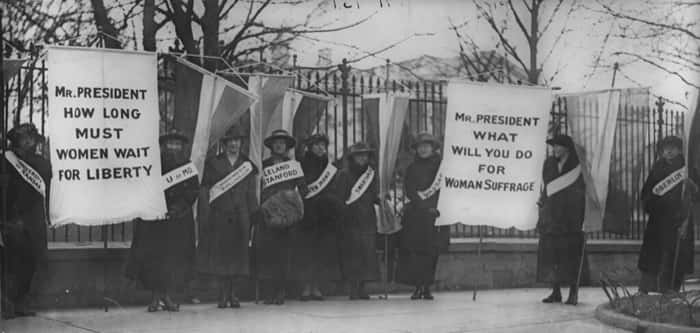
On June 4, 1919, women in the United States achieved a landmark win in their long fight for equality: Congress passed the 19th Amendment, which officially secured women's right to vote. What makes this story particularly ironic is that women had actually been able to cast ballots in many of the colonies prior to the Revolutionary War and the formal creation of the United States. Yet as the young nation took shape, that right was steadily stripped away — by the early 1800s, every state had written a constitution that denied women even limited voting rights. What followed was a determined, century-long struggle by women to reclaim their voice in the democratic process.
The fight picked up real steam around the middle of the 19th century. A turning point came with the Seneca Falls Convention of 1848, an event that injected powerful energy into the suffrage cause. Women and men alike came together at this gathering to debate and discuss the civil, social, and religious rights of women. Out of those discussions emerged the Declaration of Sentiments — a bold document laying out specific demands for equality. Over the next 60 years, advocates pushed relentlessly for women's suffrage, with the first formal proposal reaching Congress in 1878.
After an extraordinary 41 years of Senate debate, the Amendment finally passed on June 4, 1919. But passage was only part of the battle — ratification required the approval of three-fourths of the states. That critical threshold was crossed on August 18, 1920, when Tennessee stepped forward as the 36th state to ratify the 19th Amendment, cementing women's right to vote into the fabric of American law.
The ripple effects of the 19th Amendment have been profound and enduring for the people of the United States. By formally barring the government from denying or restricting anyone's right to vote on the basis of sex, the Amendment enfranchised 26 million women the day it was signed into law.