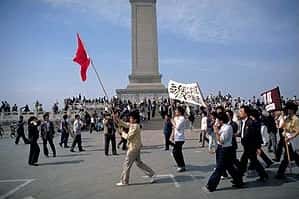
What began as a wave of political activism in Tiananmen Square turned into one of the most harrowing chapters in Chinese history. Over the course of a month, the Tiananmen Square Protests saw thousands of Chinese students and fellow demonstrators come together with bold demands: an end to political corruption, meaningful economic changes, and the removal of restrictions on fundamental human rights for Chinese citizens. Far from fading as the weeks passed, the movement only swelled in both scale and fervor. Then, on June 3, 1989, the People's Liberation Army moved against the protesters with overwhelming force — an event that would become known as the Tiananmen Massacre.
The spark that ignited this firestorm was the death of Hu Yaobang, a prominent politician in the Chinese government during the 1980s. Widely seen as a champion for reform, his passing unleashed a torrent of concern and discontent among ordinary citizens. Students from universities across the country began converging on Tiananmen Square, calling for the very changes Hu Yaobang had started to implement. Momentum built rapidly as their ranks grew, and strategies such as hunger strikes drew sympathy and support from people throughout the nation. At its peak, over 1 million citizens were actively engaged in the protests.
It all started in April 1989, and by May, the Chinese government — alarmed by the potential spread of the protesters' demands — concluded that action was necessary. Martial law was declared, and military troops were deployed to confront the unrest. On June 3rd, soldiers opened fire on protesters and bystanders in Tiananmen Square, leaving thousands dead and even greater numbers injured. In the aftermath of the massacre, the Chinese government initiated a sweeping crackdown on its citizens, arresting anyone suspected of involvement in the attempted revolution.
The Tiananmen Massacre stands as a defining moment in Chinese history — a stark reminder of the extreme measures the government has been willing to take in order to silence dissenting voices.