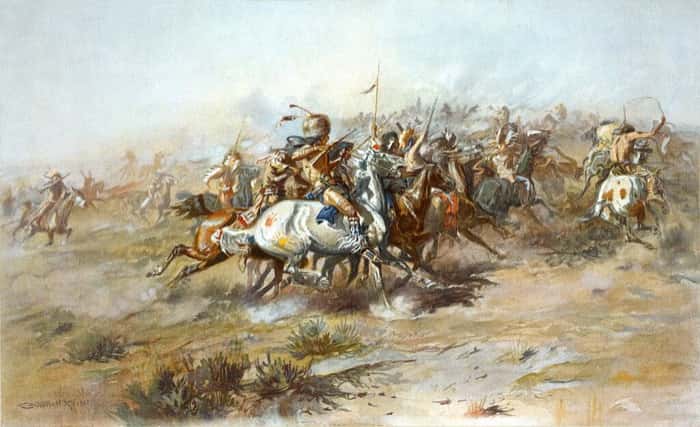
On June 25, 1876, one of the most dramatic clashes in American history unfolded — the Battle of Little Bighorn, better remembered by many as Custer's Last Stand. At its core, this was a fierce struggle over land and rising hostilities, pitting General Custer and the U.S. 7th Cavalry against warriors of the Lakota and Cheyenne tribes. To this day, it stands as what is often regarded as the largest and most significant encounter of the Great Sioux War of 1876.
The roots of this confrontation stretched back to 1868, when the United States entered into a treaty with the Lakota and Cheyenne tribes. Under its terms, the tribes received exclusive rights to the Black Hills area in western South Dakota and northern Wyoming. Everything changed in 1874, though, when gold was found in the region. Despite mounting pressure, the tribes refused to sell the land back to the United States. White settlers began pouring into the area chasing that gold, disregarding the treaty that recognized the tribes' ownership of the land. With tensions spiraling, the U.S. government issued demands that the tribes move onto reservations — demands that many flatly refused to obey.
Acting on orders to confront Native American tribes living along the Bighorn River in Montana, General Custer led the U.S. 7th Cavalry into action on June 25, 1876. What they expected to be a raid on a small village turned into something far more devastating — a massive force of Lakota and Cheyenne warriors was waiting. The cavalry found itself overwhelmed almost immediately, and the engagement ended with the complete destruction and death of Custer and his troops. Ironically, while this marked a significant victory for the Native American tribes, it also invited a wave of intensified military pressure that ultimately forced them onto designated reservations. Ever since, the Battle of Little Bighorn has endured as a powerful symbol of Native American resistance and the deep conflict between white settlers and Native American cultures.