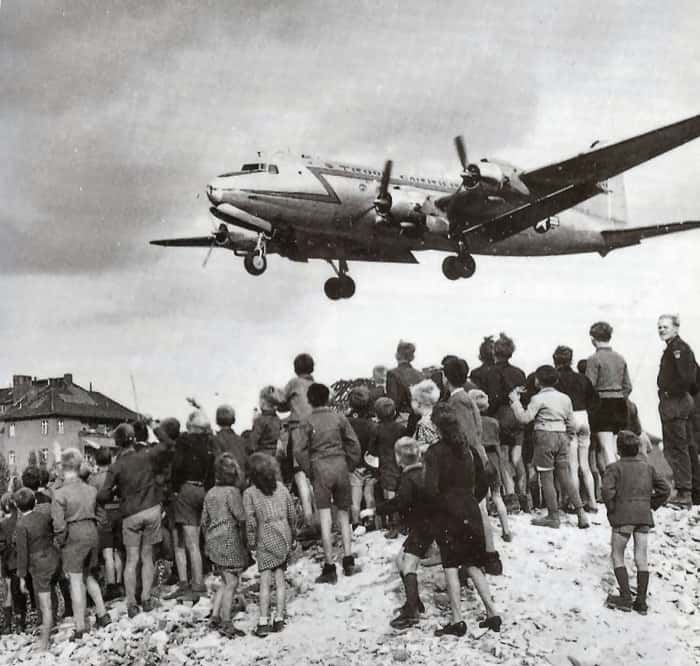
When the dust settled after World War II, Germany found itself carved into four occupation zones, with each one falling under the authority of a different Allied Power: the United States, Great Britain, France, and the Soviet Union. The Western Allies—France, Great Britain, and the United States—took charge of the western portion of the country, while the eastern part came under Soviet control. It didn't take long for friction to build between these former allies, as the Soviet Union increasingly saw the Western powers as a direct threat to its hold on East Germany. This simmering conflict boiled over on June 24, 1948, when the Soviet Union launched the Berlin Blockade in retaliation against what it considered provocative moves by the Western Allies.
What exactly made the Soviet Union feel so threatened? For starters, the Western Allies backed the reconstruction of Germany—a prospect the Soviets feared would erode their influence and grip over their own designated zone. On top of that, the Western powers pushed for economic integration across the region and rolled out a new currency, the Deutsche Mark, in West Berlin. From the Soviet perspective, this currency amounted to a direct assault on their vision of a unified communist area. Feeling cornered by these developments, the Soviets responded by imposing the Berlin Blockade.
By severing every land and water route into West Berlin, the blockade stripped residents of access to critical necessities—food, fuel, and electricity all vanished virtually overnight. The Soviet Union's goal was clear: force the Western Allies to walk away from the city and scrap their new currency reform. Today, historians regard this confrontation as a defining moment in the opening chapter of the Cold War.
Rather than back down, the Western Allies answered with the Berlin Airlift—a massive logistical undertaking that spanned an entire year, ferrying vital supplies to the besieged population of West Berlin. Through this extraordinary effort, the Western Allies demonstrated their resolve, capability, and technological prowess, ultimately breaking the Berlin Blockade in 1949. Yet this triumph came at a cost, as it ratcheted up Cold War tensions even further.