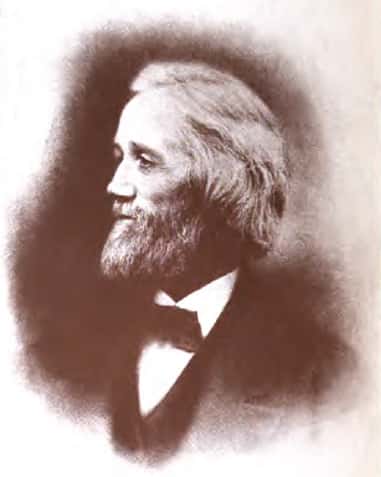
On June 23, 1868, American inventor Christopher Latham Sholes secured a patent for what he called an "improvement in typewriting machines." While he certainly wasn't the first person to dream up such a device—the earliest known typewriter concept stretches all the way back to 1712—his prototype stood apart as the first to gain real practical use and commercial traction.
Born in Pennsylvania in 1819, Christopher Latham Sholes spent a considerable portion of his career in newspaper publishing before making his way into the political arena. He represented Wisconsin in the State Senate, first as a Democrat from 1848 to 1849, and later as a Republican from 1856 to 1857. During this time, he became a key figure in the push to abolish the death penalty in Wisconsin. Even while immersed in politics, Sholes never stepped away from writing and publishing for a local newspaper—a passion that sparked his drive to create devices that could make the profession more efficient. Among his inventions were a page numbering machine designed to automate the task of numbering pages, a newspaper addressing machine that simplified the addressing process, and eventually, his landmark improvements to the typewriting machine.
Interesting Facts about Sholes' Typewriter:
- One persistent headache with early typewriter designs was key jamming. The QWERTY keyboard layout that Sholes developed went a long way toward addressing this frustrating issue.
- The very first document ever produced on a typewriter was a contract that Sholes himself typed up.
- Building a single one of Sholes' typewriters ran approximately $250—a figure that translates to roughly $5,000 in today's money.
- Sholes' keyboard broke new ground by arranging letter keys in alphabetical order.
- Another first for Sholes' keyboard was the inclusion of both capital and lowercase letters, made possible by the introduction of the "shift" key. Interestingly, he deliberately left out a dedicated number 1 key, reasoning that typists could simply substitute the lowercase "l" instead.