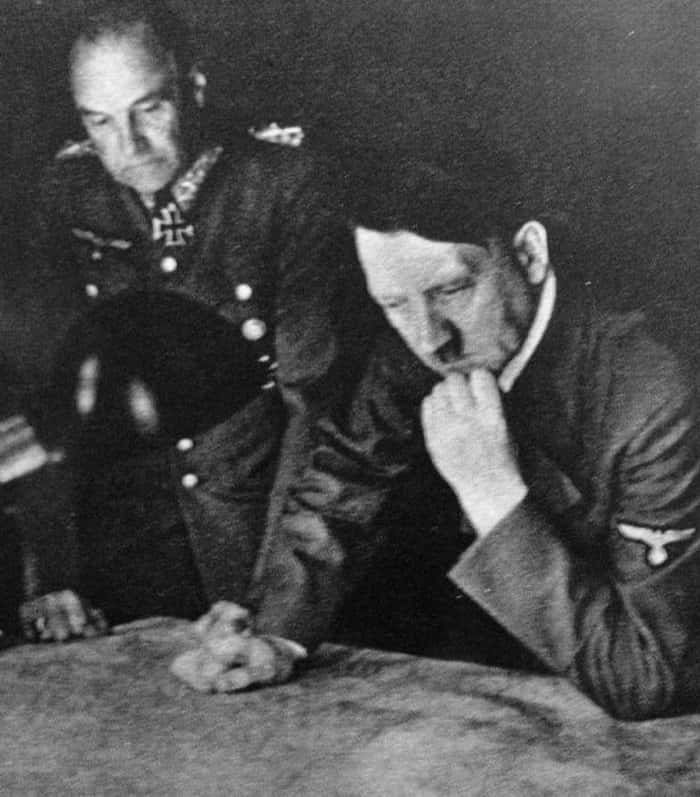
On June 22, 1941, Adolf Hitler set into motion the largest military offensive the world had ever seen, sending Nazi Germany's forces crashing into the Soviet Union in what became known as Operation Barbarossa. Roughly 4 million Axis troops — drawn from Germany, Romania, and Finland — surged across a staggering 2,000-mile front stretching through the western reaches of the Soviet Union. The sheer scale of this campaign is hard to overstate: more than 10 million soldiers took part in its opening phase alone, and by the time the operation ground to a halt in December 1941, it had produced more than 8 million casualties, cementing its place as one of the most extensive and deadly military undertakings in history.
What drove such a massive gamble? The motivations behind Operation Barbarossa were layered and far-reaching. At the ideological core, Adolf Hitler was determined to stamp out communism in the Soviet Union, which he regarded as a fundamental threat to his Nazi worldview. But ideology wasn't the only factor pulling him eastward. Germany desperately needed resources to fuel its ongoing war machine, and the Soviet Union offered access to vital oil supplies and agricultural output. Beyond resources, the vast Soviet lands represented an opportunity to secure expanded living space for German citizens. On top of all this, Hitler was convinced that a rapid triumph over the Soviets would come easily — and that such a victory carried a bonus. He believed Britain depended on the Soviet Union, meaning that knocking the Soviets out of the picture would amount to defeating Britain by extension.
So why did this colossal offensive ultimately collapse? The answer lies in a series of critical miscalculations made by the German army. Most fundamentally, they vastly underestimated the Red Army — its sheer size, its resilience, and its fighting strength — fully expecting a quick and decisive win. Instead, they ran headlong into ferocious Soviet resistance that caught them completely off guard. Compounding the problem was the absence of a coherent operational strategy for such an enormous undertaking. German soldiers found themselves woefully unprepared for both the brutal winter conditions and the immense territorial expanse they were trying to conquer. Misjudging the scale of the land while simultaneously underestimating the resolve of the local population proved to be a fatal combination. Meanwhile, the invasion triggered a major geopolitical shift: the Soviet Union, now under direct attack, threw in its lot with the Allied Powers, fundamentally altering the trajectory of the broader conflict.