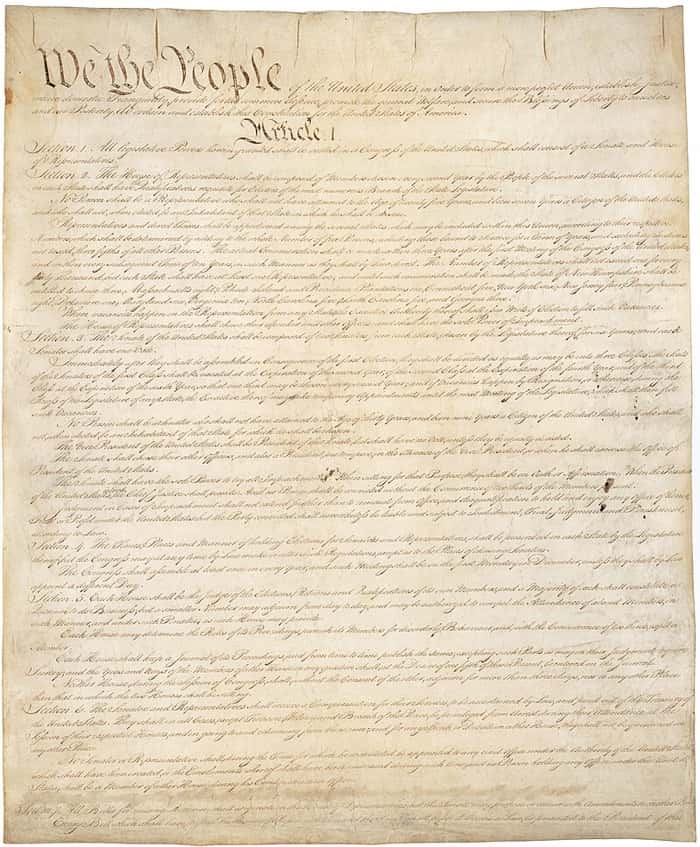
With the Revolutionary War behind them and a new nation taking shape, the thirteen original colonies faced an undeniable reality: they needed a better system of governance. The Articles of Confederation, which had served as a wartime framework, proved too fragile and clearly demanded serious overhaul. To tackle this challenge, representatives from 12 colonies gathered to craft a fresh governing document — Rhode Island opted to boycott the proceedings entirely. This gathering, called the Constitutional Convention, produced a new Constitution that was then sent out to the states for their approval. For the document to take effect, 9 states needed to sign on, representing a majority at that time. That critical threshold was reached on June 21, 1788, when New Hampshire stepped forward as the 9th state to ratify, thereby making the Constitution the official governing law of the United States of America.
Unsurprisingly, the road to ratification was anything but smooth, as fierce debate accompanied the process. A central worry among many states was the prospect of surrendering their own authority to a centralized government that might grow dangerously powerful. The specter of tyranny loomed large — after all, these were people who had waged a hard-fought struggle against exactly that kind of overreach under British rule. Still, these fears didn't go unanswered. The original draft underwent meaningful adjustments to ease such concerns. Chief among these was the addition of a Bill of Rights, guaranteeing the protection of individual liberties while placing clear constraints on governmental power. On top of that, a separation of powers was introduced, distributing authority across distinct branches of government so that no single entity could accumulate too much control. By May of 1790, every last one of the 13 colonies had given the Constitution their formal approval.