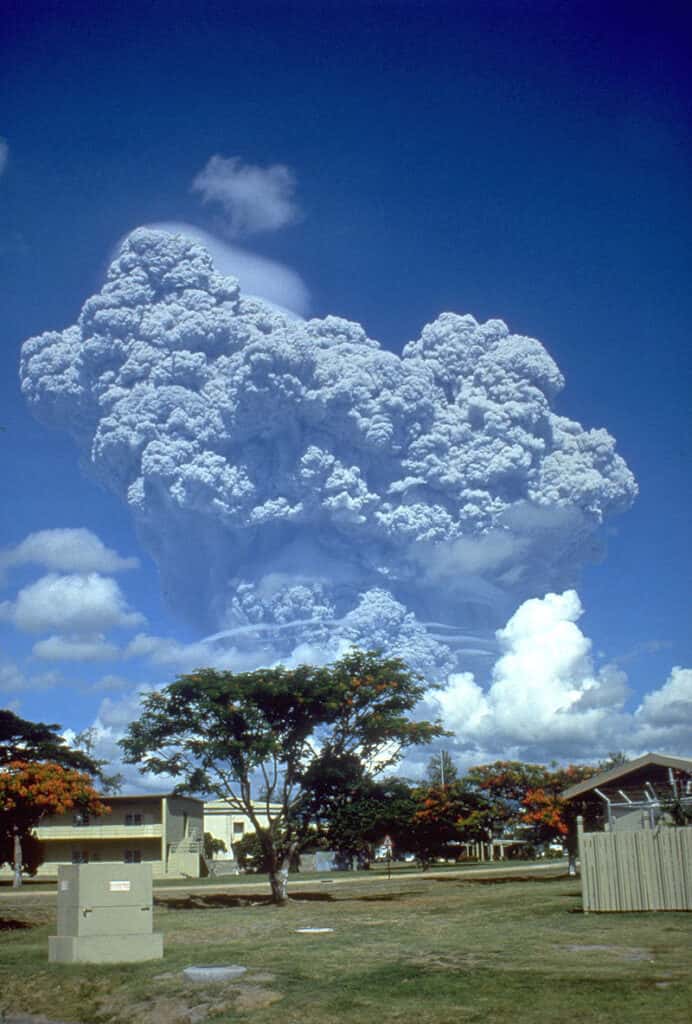
When Mount Pinatubo unleashed its fury on June 15, 1991, it became the second-largest volcanic eruption of the 20th century — and the most powerful the world had witnessed in the last 100 years. Situated along the Luzon Volcanic Arc, this stratovolcano carries a volatile history stretching back over a million years. Its record of explosive eruptions spans more than 35,000 years, with two major events occurring in the last century alone. The cataclysmic blast of June 15, 1991, proved devastating on a scale whose consequences continue to reverberate to this day.
For nearly 500 years before the 1991 disaster, Mount Pinatubo had sat quietly dormant — but it wasn't being ignored. Scientists at the Philippine Institute of Volcanology and Seismology had been keeping a watchful eye on the site and noticed a troubling uptick in volcanic activity early in 1991. Magma levels were climbing, and sulfur dioxide was streaming out in a continuous flow. Small eruptions and minor earthquakes in the surrounding region started appearing by April 1991, raising alarm bells. Then, on June 7, a lava dome formed — a clear warning that a massive eruption was on its way. Authorities scrambled to clear everyone within a 40-kilometer radius of the volcano. Despite these efforts, the June 15 eruption far exceeded predictions in its sheer magnitude, bringing catastrophic destruction and a heartbreaking toll in human life.
Even though nearly 20,000 people had been moved to safety ahead of the catastrophe, the eruption and the devastating mudslides that followed claimed the lives of nearly 900 individuals, with hundreds more suffering injuries. Thousands were left without homes as entire villages disappeared beneath debris. The economic fallout was staggering, with total financial losses and hardships estimated to be in the billions of dollars. Beyond the local devastation, the eruption reshaped conditions worldwide — the massive volume of ash ejected into the atmosphere triggered a global cooling of 1.5 degrees Celsius, disrupting weather patterns and the broader climate system. Mount Pinatubo erupted once more in 1992, though on a much smaller scale. Even now, the lasting effects of the 1991 eruption are still being felt today.