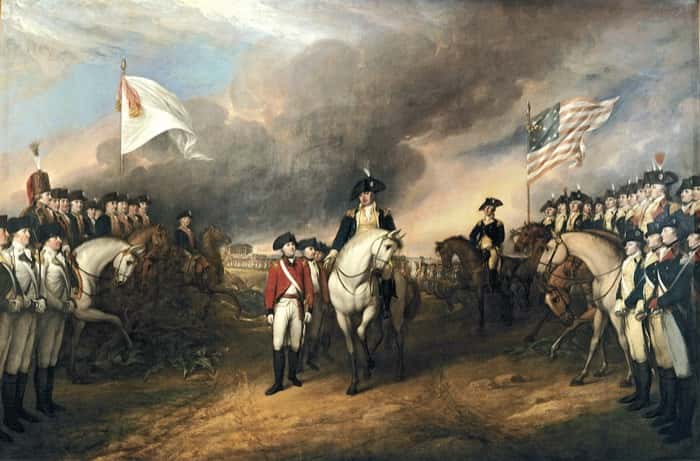
Over time, the 13 original colonies of the United States found themselves growing more and more distrustful of British authority. Taxation without representation in Parliament became a persistent grievance, fueling a widespread belief among colonists that they had no real power to shape their own laws and governance. As these tensions mounted, it became clear that the colonies would need to band together if they hoped to break free from the British Empire. That moment of unity arrived on June 14, 1775, when the Continental Congress — a body of revolutionary leaders representing every colony — voted to establish the Continental Army as the official military force in their fight against British rule.
Bringing the 13 colonies together under one banner was the Continental Army's central mission. Its ranks drew from every single colony, creating a remarkably diverse fighting force. Native-born men stood alongside immigrants from England, the young served beside the old, free and enslaved African Americans joined the cause, and even some women played a role — all contributing to what would become the first United States Army. At the helm was George Washington, who led the army for the entirety of the Revolutionary War. At its peak strength, the Continental Army is estimated to have comprised approximately 230,000 soldiers, and the toll of the conflict was steep, with more than 24,000 casualties suffered across the war.
Once the Revolutionary War concluded with the signing of the Treaty of Paris, the Continental Army was officially disbanded. The United States Army formally took its place in 1796. Even so, the Continental Army's legacy endures as a foundational and essential chapter in the story of American independence — the very institution that paved the way for today's Army.