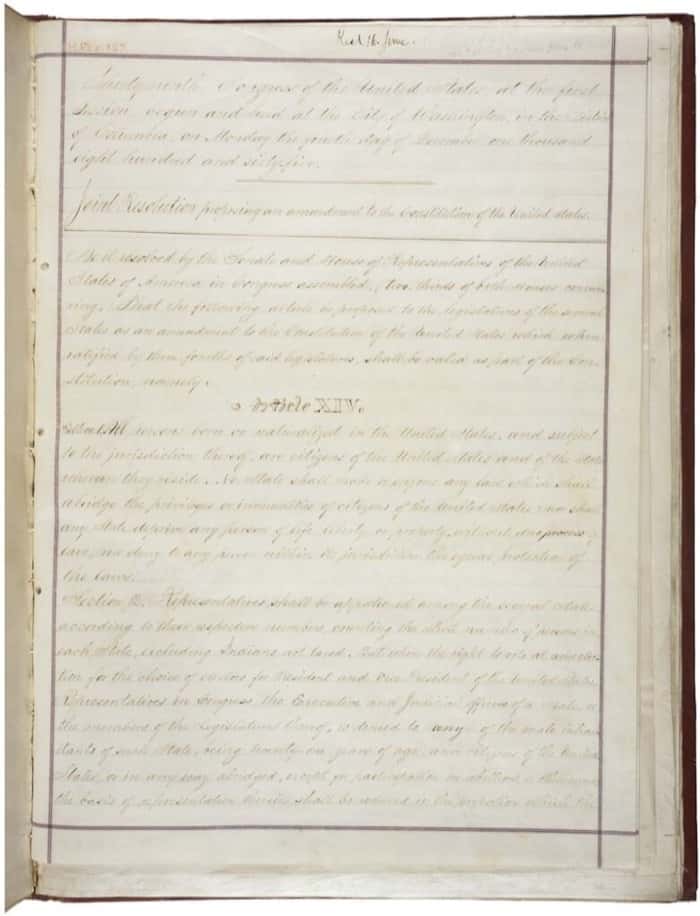
On July 9, 1868, the 14th Amendment became part of the Constitution, extending citizenship to every person naturalized in the United States while guaranteeing complete legal protection to all citizens.
The former Confederate states fought fiercely against this amendment. Its provisions granting formerly enslaved persons full citizenship, equal protection under the law, and the right to own property were deeply contested. Despite their opposition, these states had no real choice — ratifying the amendment was a requirement if they wanted to regain their representation in Congress.
Fun Facts:
- The newly freed enslaved persons were fully included under the umbrella of "all citizens." Beyond that, the 14th Amendment prohibited any state from stripping a person of life, liberty, or property unless due process of the law was followed.
- No other constitutional amendment comes close to being as frequently cited in legal disputes. Its sweeping and unambiguous guarantee of civil rights to all citizens has made it a cornerstone of litigation.
- Building on the foundation established by the 13th Amendment — which officially abolished slavery — the 14th Amendment expanded the fundamental rights afforded to enslaved persons even further.
- Not everyone born on United States soil automatically received citizenship under this amendment. Native Americans were the notable exception, and they would not gain citizenship until 1924.
- Courts were also empowered by the 14th Amendment to intervene in cases involving "vaguely defined rights," broadening judicial authority in significant ways.
- Through this amendment, Congress was granted an active role in safeguarding the rights of individuals and minority groups across every state.
- Even though ratification came in 1868, the practical reality was quite different — it would take a number of years before black people saw their rights meaningfully upheld in the court of law.