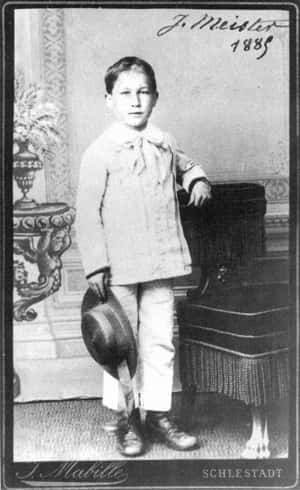
During the summer of 1885, a rabid dog attacked and severely mauled a young boy called Joseph Meister, who was just 9 years old at the time. The injuries Joseph suffered were life-threatening, and the prospect of rabies developing made his situation even more dire—survival odds for anyone who contracted the disease were virtually nonexistent. Desperate to find any way to help her son, Joseph's mother discovered that a French chemist by the name of Louis Pasteur had been conducting research into vaccination techniques targeting rabies. She made the journey to where Pasteur was based, determined to convince him to intervene. Pasteur initially resisted, troubled by the ethical implications of treating the boy given that he lacked a medical license. Yet Joseph's mother proved persuasive enough to change his mind. And so, on July 6, 1885, young Joseph earned a remarkable place in medical history as the first person ever to be successfully inoculated against rabies.
The vaccine Pasteur used relied on cultivating the rabies virus inside healthy rabbits, after which the infected tissue was dried out to weaken the pathogen. It was actually Émile Roux, a colleague of Pasteur, who had developed this vaccine and had previously tested the treatment on 50 dogs. Joseph Meister, however, became the first recorded human recipient of the regimen Roux had created. Pasteur delivered a total of 13 inoculations to Joseph across an 11-day period, each dose containing virus that had been weakened for progressively shorter durations. When Pasteur checked on the boy three months later, he found Joseph in excellent health—rabies had never gained a foothold in his young body. The success catapulted Pasteur to hero status and proved instrumental in advancing the broader field of vaccine development.
Word of Meister's remarkable recovery spread quickly, and people began flocking to Pasteur for rabies treatment. Over the course of 1886 alone, he successfully treated more than 350 patients; just one of them went on to develop the disease. Joseph Meister himself maintained a lifelong connection to the man who saved him, eventually taking a position at the Pasteur Institute where he worked until his death at the age of 64, when he tragically took his own life.