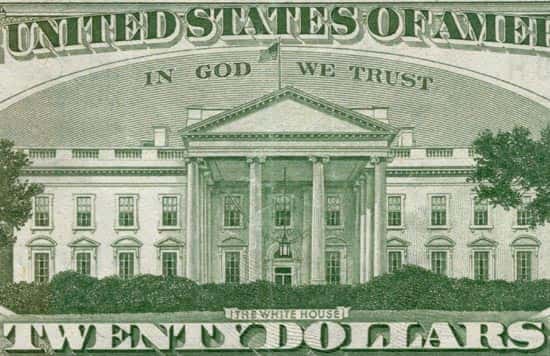
The aftermath of World War II ushered in an era of intense geopolitical rivalry, primarily between the United States and the Soviet Union — two former Allied powers now locked in a struggle rooted in fundamentally incompatible worldviews. The Soviet Union embraced communism, operating under a one-party political system within an atheistic framework. The United States, by contrast, championed democracy, individual freedom, and an acknowledgment of God. This ideological clash fueled the Cold War, a protracted standoff lasting from 1947 to 1991. It was against this backdrop that President Dwight D. Eisenhower signed into law the national motto "In God We Trust" on July 30, 1956, seeking to underscore the religious convictions at the heart of American identity.
Long before it became the country's official motto, the phrase "In God We Trust" already held a place in American history. It first appeared in the wake of the Civil War, when President Abraham Lincoln approved its use on all U.S. coinage — a period of national upheaval during which many Americans turned to faith and sought divine guidance for their fledgling reunified nation. When the Eisenhower Administration formally elevated the phrase to the status of national motto, the country was once again gripped by a wave of religious fervor. Eager to draw a clear line between American values and the atheistic ideology of the Soviet Union, lawmakers mandated that the slogan appear on all printed currency and coins as the official motto of the United States.
Not everyone embraced the decision to make "In God We Trust" the nation's official motto, and the debate has only grown over time. When it was signed into law in 1956, broad public support — fueled by Cold War anxieties — helped smooth its passage. In the decades since, however, critics have raised pointed objections. Some argue the motto was driven more by political calculation than by genuine national belief, while others insist it endorses a particular religious perspective in a way that infringes on First Amendment protections. Despite these challenges, a recent poll shows that a majority of Americans continue to stand behind the motto, a fact frequently cited to justify its enduring presence in public life.