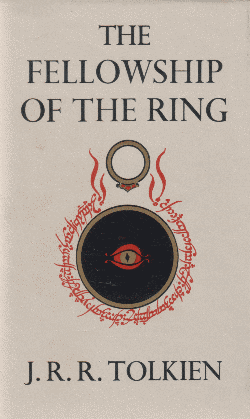
The Lord of the Rings trilogy stands as one of the crowning achievements of high fantasy fiction, and its impact on the modern fantasy genre can hardly be overstated. J.R.R. Tolkien poured decades of painstaking effort into crafting every facet of his imagined universe — from diverse species and richly detailed settings to fully realized languages — resulting in a depth of world-building that made the finished work nothing short of masterful. It all began for readers on July 29, 1954, when The Fellowship of the Ring, the trilogy's opening volume, hit bookshelves.
When The Fellowship of the Ring first arrived, reactions were far from unanimous. Certain critics celebrated its immersive world-building and compelling narrative, but others remained decidedly unimpressed. A number of readers and reviewers found the story over-the-top, even ridiculous, and quickly dismissed it as something that fell short of "true literature." Yet as the years passed, the trilogy found a passionate and growing audience — especially during the counter-culture movement, when its themes struck a chord with those eager to push back against mainstream norms. Despite that rocky start with critics, the *The Lord of the Rings* trilogy went on to become one of the most beloved and influential book series ever written, with over 150 million copies sold and translations into numerous languages.
Fun Facts about J.R.R. Tolkien:
- J.R.R. Tolkien was a remarkably gifted linguist who could speak over 16 languages fluently, among them Latin, Greek, and Gothic. On top of that, he invented and developed multiple original languages for the characters inhabiting The Lord of the Rings trilogy.
- He held a position as a professor of literature at the prestigious University of Oxford in England.
- Back in 1937, he published The Hobbit, a tale he had originally crafted for his own children.
- It has been said that he regarded the devoted fans of The Lord of the Rings trilogy as "lunatics." Tolkien saw himself first and foremost as a scholar and cast a deeply critical eye over his own writing — so much so that he never truly felt the finished work reached the epic heights he had envisioned. Because of this, he believed that fans of the trilogy couldn't truly grasp the level of storytelling he had been striving for.
- Tolkien shared a close and complicated relationship with fellow author C.S. Lewis.