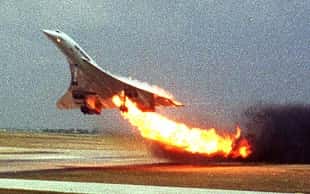
The Concorde fleet had been flying for 27 years without a single fatal incident — until July 25, 2000, when everything changed. That morning, an Air France Concorde carrying 109 passengers and crew lifted off from Charles de Gaulle Airport in Paris, headed for New York City in the United States. Within minutes of departure, the aircraft went down, killing everyone on board along with four people on the ground.
What exactly went wrong? Air France Flight 4590 had barely been airborne for two minutes when disaster struck. During its takeoff roll, the plane had run over a piece of debris sitting on the runway, and the impact shattered one of its tires. Shards of rubber launched in every direction at tremendous velocity, slamming into the aircraft's underside and wreaking havoc on the landing gear. The destruction made an immediate return to the ground impossible, and worse still, it ruptured a fuel tank that then exploded. With the crew unable to maintain control, the stricken plane plunged into a hotel in Gonesse. The crash killed all 100 passengers and nine crew members instantly, along with those inside the hotel. Four other people sustained injuries in the disaster.
The destruction of Air France Flight 4590 sent shockwaves through the aviation world, fundamentally reshaping how Concorde aircraft were maintained and regulated. Every Concorde in service was immediately pulled from the skies while engineers carried out extensive safety reviews and worked to uncover any additional weaknesses in the fleet. The disaster drove home a sobering truth: flights operating at supersonic speeds demanded extraordinary safety vigilance. In response, the entire Concorde fleet was retrofitted with reinforced fuel tank liners and other upgraded protective features. While the crash wasn't the only reason behind the eventual decision, it played a meaningful role in the retirement of all Concorde operations by 2003.