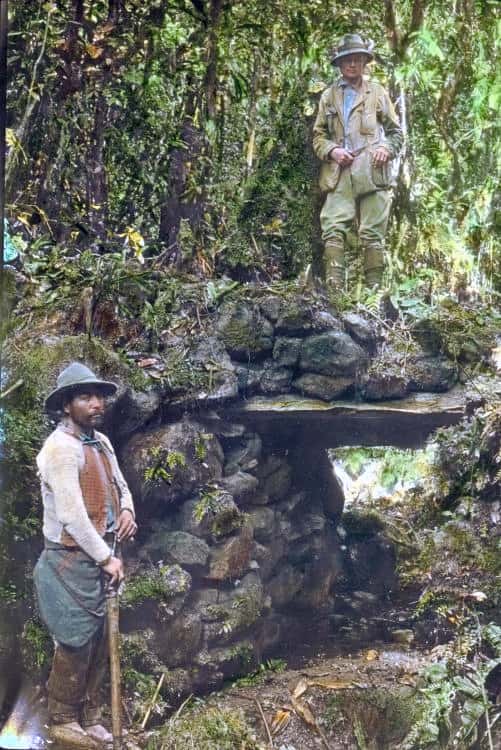
Though he lacked formal training as an explorer, Hiram Bingham harbored an intense curiosity about the history of ancient civilizations. He poured much of his spare time into studying ancient cultures, with a particular emphasis on the "lost" civilizations of South America. At Yale, where he served as a professor, his classes and lectures reflected these passions. In 1911, he managed to persuade Yale University to fund an expedition to South America, with the goal of investigating ancient Inca sites and probing the Cusco region of Peru for clues to the Incas' lost civilization. Then, on July 24th, piecing together various rumors and clues, Bingham rediscovered the city of Machu Picchu.
When Yale gave the green light for his 1911 South American expedition, Bingham was overjoyed. He meticulously mapped out his journey with a specific target in mind: locating Vilcabamba, the Incas' last and lost capital. Along the way, he managed to identify two cities — Vilcabamba and a second city called Vitcos. Guided by local rumors and assisted by an 11-year-old boy from the area, Bingham ultimately "rediscovered" the lost city of Machu Picchu. In a twist of irony, the city that the outside world considered lost was already well known to local inhabitants who were living directly on top of the ancient ruins. This remarkable find not only electrified Bingham personally but also convinced Yale to greenlight continued expeditions for exploration over the next several years.
While Hiram Bingham is widely credited with the "rediscovery" of the Incas' lost city, it's worth noting that several other explorers had reported finding it earlier in 1901 and 1906. What set Bingham's expedition apart was that it brought scientific research to the area, opening a window for the modern world to unlock the secrets of this lost empire. Both Yale University and National Geographic backed his efforts, sponsoring three additional expeditions in 1912, 1914, and 1915. Through these follow-up journeys, researchers unearthed ancient exotic animals, skeletal remains, and a variety of artifacts from the city. Machu Picchu has since become a major tourist attraction, and Bingham is largely recognized as the person who brought this extraordinary lost city to the attention of the wider world.