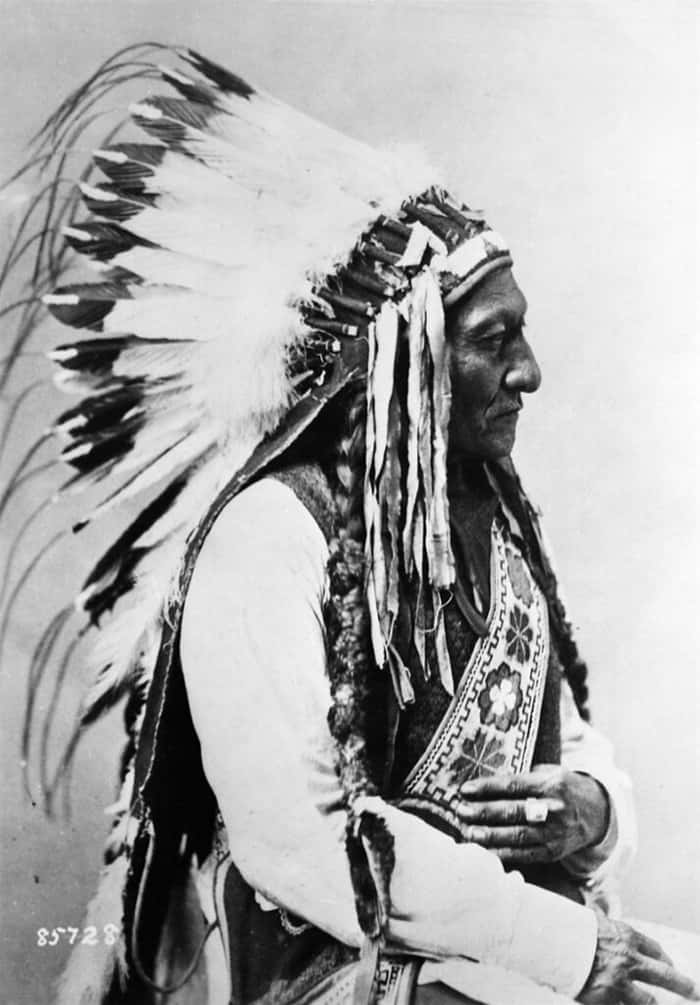
Following the devastating defeat of Lieutenant Colonel Custer at Little Bighorn, Sioux Chief Sitting Bull — long regarded as a symbol of resilience — turned himself over to U.S. troops on July 20, 1881. The surrender came only after he received promises of amnesty covering both himself and his people. The Sioux uprising of 1876 had ended with Custer's death alongside 264 of his men at Little Bighorn. Relentlessly pursued by the U.S. Army, Sitting Bull had been driven to flee across the border into Canada, with his people following close behind.
A native of the Grand River Valley, in what is now part of South Dakota, Sitting Bull rose to become a leader who commanded deep respect and recognition from his tribe. What distinguished him was a remarkable combination of exemplary warrior skills, a visionary mindset, fierce determination, and unwavering goals. His leadership qualities were on full display as early as 1864 — twelve years before the Sioux Uprising — when he stood against U.S. military forces under General Alfred Sully at Killdeer Mountain. From that point forward, he devoted his life to spearheading Sioux resistance against the white man's appropriation of Sioux lands. This cause attracted a massive following not only from his own tribe but also from the Cheyenne and Arapaho tribes, ultimately resulting in his appointment as the principal chief of the Sioux nation in 1867.
Sitting Bull's first encounter with Custer came in 1873, setting the stage for their final and far more consequential clash three years later. Though he was not among the strategic leaders directing Sioux forces during the Battle of Little Bighorn, his influence proved decisive — it was Sitting Bull who inspired Crazy Horse and other native leaders toward their historic victory over the U.S. military. Yet this very triumph, combined with the persecution he endured after escaping to Canada, ultimately led him back to the U.S. in 1881, where he chose to surrender.
Sioux Chief Sitting Bull surrendered to U.S. troops on July 20, 1881, in the aftermath of Lieutenant Colonel Custer's defeat at Little Bighorn, having secured promises of amnesty for both himself and his people.