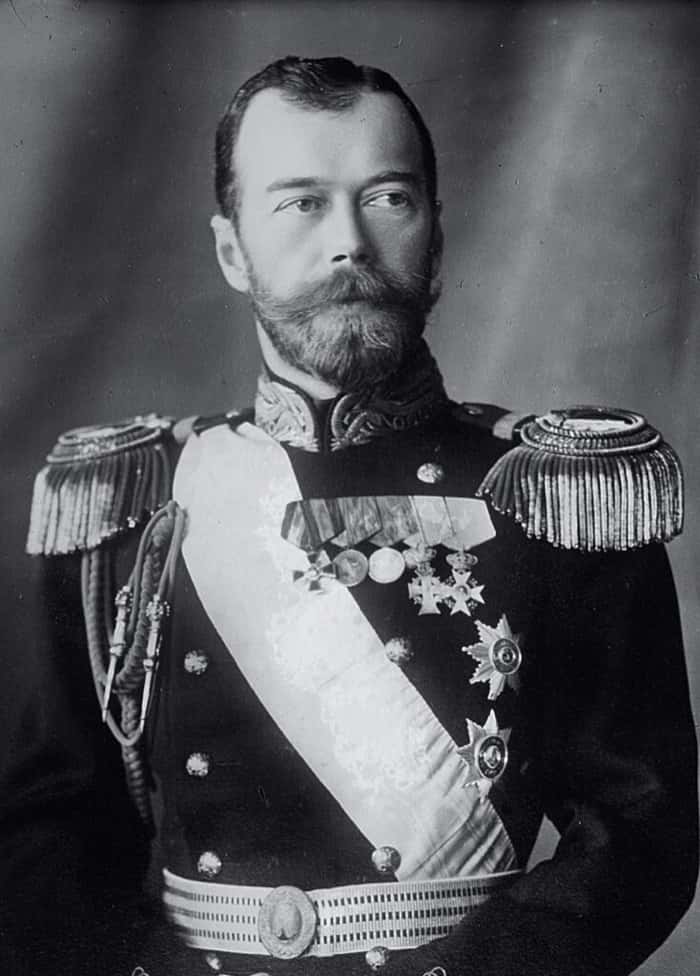
For over 300 years, spanning from the 17th century to the early 20th century, the Romanov dynasty held power in Russia as the country's second and final ruling family. The last emperor to sit on the throne was Tsar Nicholas II, whose reign stretched from 1894 to 1917. That reign came to a dramatic end during the Russian Revolution of 1917, a period of massive turmoil fueled by widespread public frustration with the political and economic status quo. Citizens had grown deeply resentful of autocratic governance, which many saw as riddled with corruption and inefficiency. The revolutionary upheaval ultimately forced Tsar Nicholas II to give up the throne. Yet even abdication wasn't enough to quell fears that autocratic power might return — and on July 18, 1918, Bolshevik revolutionaries carried out the execution of Tsar Nicholas II along with his entire family.
Following his forced removal from power in 1917, Tsar Nicholas II and his loved ones found themselves confined under house arrest within a palace in Petrograd (now St. Petersburg.) Meanwhile, governance of Russia fell to a provisional government, though its lack of Constitutional authority rendered it largely powerless. Seizing on this instability, the Bolshevik revolutionaries — fierce opponents of autocratic rule operating under the leadership of Vladimir Lenin — overthrew the provisional government and transformed Russia into the world's first communist state. With this new order in place, the Romanov family was transferred from Petrograd to Yekaterinburg in 1918.
Once in Yekaterinburg, Tsar Nicholas II, his wife, Alexandra, and their five children were confined in a residence belonging to a Bolshevik military member, a place commonly known as the "House for Special Purposes." For three months, the family lived under house arrest within its walls. Then, without warning, they were led to the basement and killed by firing squad. In the aftermath, the Bolshevik revolutionaries attempted to conceal the full scope of what had happened, insisting that only Tsar Nicholas himself had been executed as a symbolic end to the Romanov reign. The truth wouldn't surface for decades — it was not until 1979 that the remains of the family were finally uncovered.