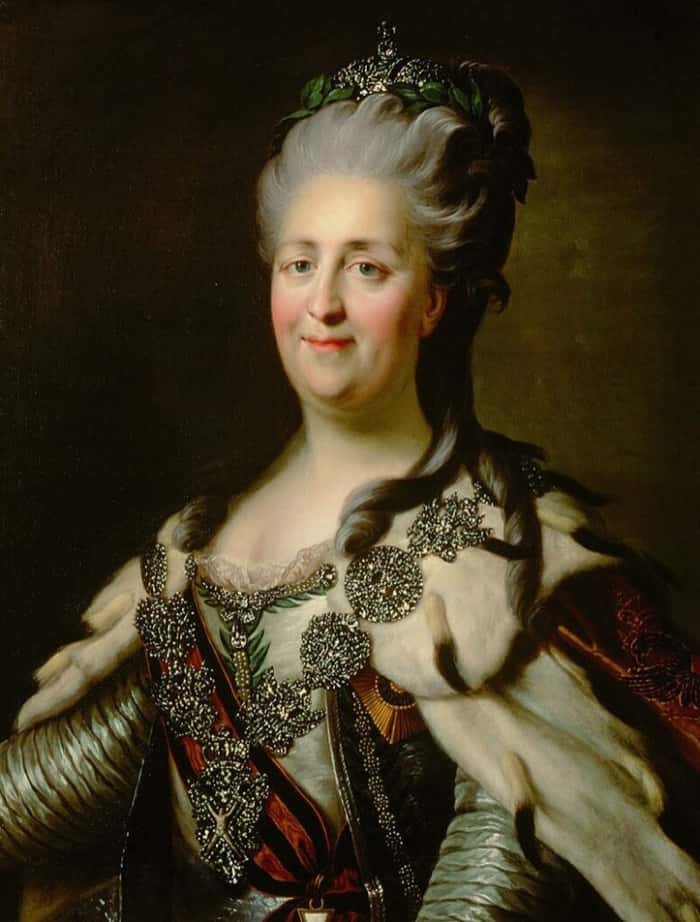
The Senate proclaimed the Manifesto bearing the signature of Empress Catherine II on July 17, 1762, formally declaring her ascension as Russia's sole ruler. Just a few months later, on October 3 of the same year, she received her official coronation as the autocratic sovereign of the nation.
Known widely as 'Catherine the Great,' Catherine II more than lived up to that distinguished epithet through decades of prosperous leadership. Serving as tsarina of Russia from 1762 to 1796, she presided over an era defined by sweeping cultural achievements, political transformation, and remarkable territorial growth.
Peter III's Reign
When Empress Elizabeth passed away in December 1761, the throne fell to Peter III. Elizabeth had orchestrated the marriage of her nephew, the Duke von Holstein-Gottorp — who would become Peter III — to Catherine back in 1745. He was 17 at the time, and Catherine, then a minor German princess, was 16.
Peter III's time as emperor proved remarkably brief, spanning a mere six months. Military officers viewed his decision to forge an alliance with Prussia as nothing short of treasonous. He further drove a wedge between himself and the Russian aristocracy through domestic reforms that included stripping monasteries of their land ownership and releasing the nobility from obligations of state and army service.
The military, the Orthodox church, and the Russian aristocracy all found themselves at odds with Peter's foreign and domestic agenda. The ill-fated tsar was believed not to have the national interests of Russia. Particularly galling to the public was his threat to lock Catherine away in a convent so he could wed his mistress. Catherine, by contrast, enjoyed widespread popularity among the people.
Catherine II Takes Command
Seizing the moment when Peter departed the capital for a vacation, Catherine mobilized 14,000 soldiers of St. Petersburg to rally against her husband, asserting that the tsar had abandoned the nation's interests. Upon Peter's return, she compelled him to put his signature on an abdication document, clearing her path to the throne.
Just eight days after Catherine's triumphant coup, Peter III was discovered dead at Ropsha, where Alexei Orlov — the younger brother of Catherine's lover — had sent him into exile. How exactly he met his end continues to fuel historical debate, with some maintaining he was murdered and others contending that natural causes were to blame.