The year 2000 brought an unexpected twist to Bastille Day festivities — the Sun itself decided to put on a show. Satellites picked up the first signs of a solar disturbance at around 10:00 a.m. on July 14, 2000, and what followed was an X-class solar flare — the most powerful classification possible — that raged on for several days. This spectacular event, now remembered as the Bastille Day Solar Flare, left a lasting mark on solar science, our understanding of space weather, and how we prepare for future solar activity.
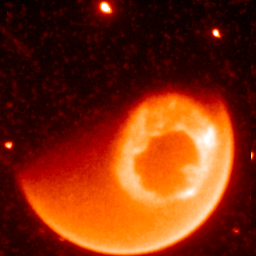
Erupting from a particularly turbulent region of the Sun designated AR9077, this flare packed a serious punch with a classification of X5.7 — a truly formidable burst of energy. To make matters even more dramatic, a Coronal Mass Ejection (CME) was also detected on July 14th. CMEs involve enormous eruptions of magnetic fields and plasma from the Sun's corona, sending a massive bubble of solar material hurtling through space with the potential to penetrate Earth's atmosphere. On top of that, a Solar Energetic Particle event was triggered, compounding the effects on our planet's atmosphere and causing widespread disturbances. Earth's magnetic field took a beating, and the consequences rippled through everyday technology — internet connections faltered, GPS signals became unreliable, and power grids experienced disruptions. On a more poetic note, the flare gave Bastille Day revelers an added gift: stunning auroral light displays painted across the sky.
As one of the most powerful solar flares ever recorded, the Bastille Day event of 2000 became a watershed moment in space science. Researchers were galvanized to deepen their understanding of space weather, while the incident served as a stark reminder of just how exposed Earth remains to solar activity. The urgent need for better space monitoring systems and more robust weather tracking capabilities became impossible to ignore.