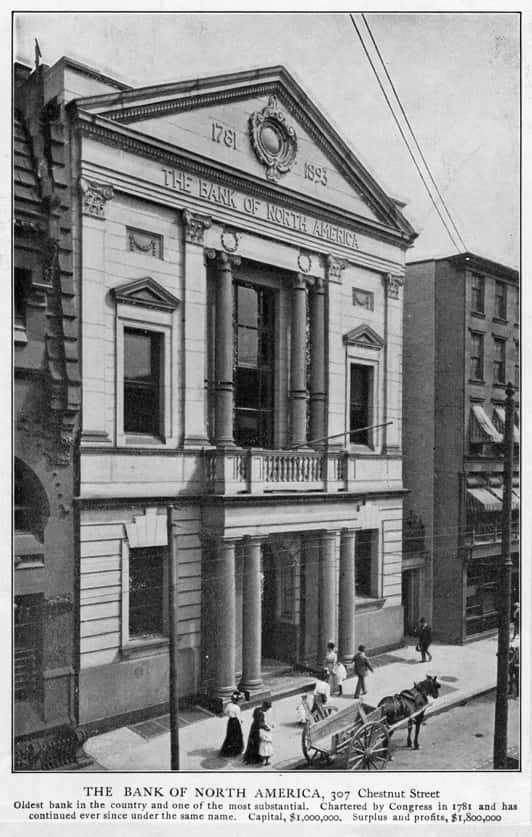
Philadelphia, Pennsylvania served as the young nation's financial center when, on January 7, 1782, something groundbreaking happened: the Bank of North America swung open its doors, earning the distinction of being the first commercial bank in the United States.
Financial chaos gripped the American colonies in the wake of the Revolutionary War. Rampant inflation plagued the economy, public trust in the currency had eroded, and the Continental Congress found itself scrambling to secure funding for the war effort. A stable financial institution wasn't just a good idea — it was absolutely critical. The Continental Congress gave its official approval to the Bank of North America charter on December 31, 1781, and within mere days, the bank was up and running.
Skeptics certainly existed in the early days, but the Bank of North America quickly proved its worth. Operating out of Philadelphia, Pennsylvania — the country's financial hub during that era — the institution became instrumental in rebuilding economic confidence. Government debts found a source of financing through the bank, and it made meaningful contributions to the nation's economic recovery once the war concluded.
By demonstrating that a centralized financial institution could actually thrive in the United States, the Bank of North America blazed a trail for institutions that followed, including the First Bank of the United States in 1791. Trade was facilitated, reliable paper currency was issued, and the turbulent post-war economy began to stabilize — all thanks in large part to this pioneering bank. Beyond its economic impact, the bank's very existence highlighted the need for stronger centralized governance, feeding directly into the conversations and debates that would shape the U.S. Constitution.
Though the Bank of North America no longer operates in its original form, its place in the American financial story remains foundational. What began as a response to urgent wartime demands ultimately became the blueprint for the modern banking system we know today.