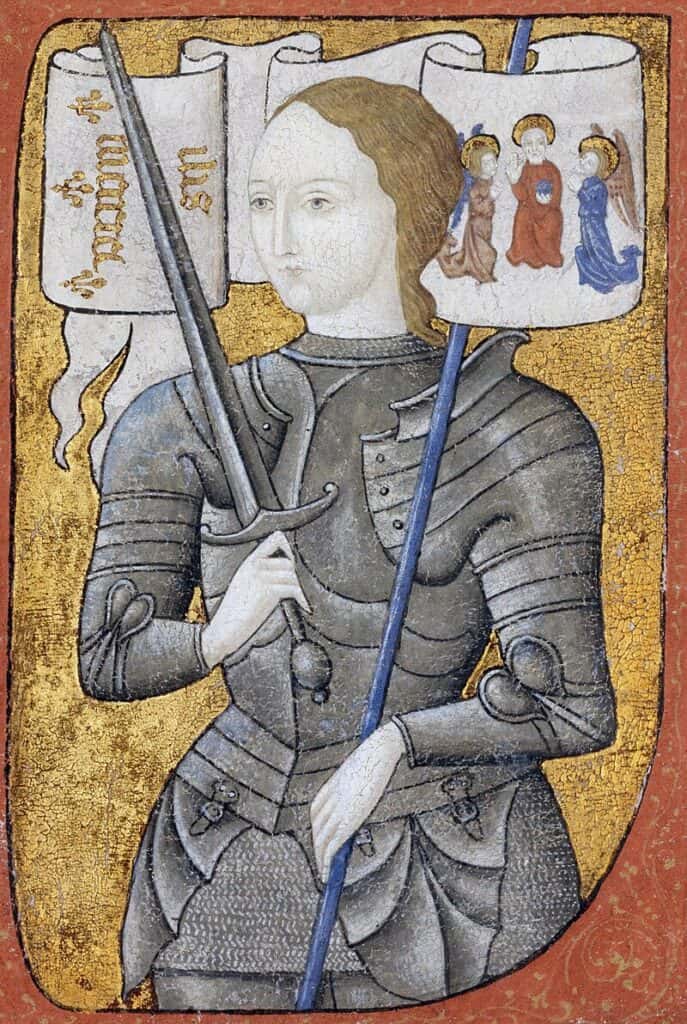
It was January 6, 1412, when a peasant family in the tiny village of Domrémy in northeastern France welcomed a baby girl into the world—a girl who would grow up to alter the course of history. Joan of Arc, driven by an unwavering conviction in her divine purpose, would rise from humble obscurity to become one of France's most powerful and lasting symbols of patriotism, faith, and courage.
Humble Beginnings
Known also as Jeanne d'Arc, Joan spent her early years in a modest rural home, tending livestock and helping her family work the land. Though life in Domrémy was straightforward, the world beyond was anything but peaceful. The Hundred Years' War—a bitter, drawn-out struggle between England and France for control of the French crown—had plunged the country into chaos. By the time Joan entered her early teens, England and its Burgundian allies had claimed vast stretches of French territory, Paris among them.
It was during these formative years that Joan began reporting extraordinary experiences: visions of saints and angels, specifically Saint Michael, Saint Catherine, and Saint Margaret, calling on her to rescue France and ensure Charles VII was crowned king.
Joan's Rise to Leadership
Remarkably, at just 17 years old, this peasant girl managed to persuade local officials to secure her an audience with Charles VII, the disinherited French dauphin. Wearing men's clothing for her own protection, Joan captivated Charles with her fierce conviction and devotion. In a stunning turn of events, she was entrusted with command of troops headed into battle.
What followed seemed almost miraculous. In 1429, Joan was instrumental in breaking the Siege of Orléans, a pivotal moment that shifted the war's momentum decisively toward France. Her leadership—both as a strategist and a rallying symbol—breathed new life into weary soldiers and civilians, reigniting the dream of a united France.
A Tragic Ending
Joan's story, as extraordinary as it was, proved heartbreakingly short. The Burgundians captured her in 1430 and handed her over to the English, who subjected her to a trial on charges of heresy and witchcraft. She was just 19 years old when she was burned at the stake in 1431.
Yet her legacy refused to die with her. Decades later, her conviction was overturned, and she was proclaimed a martyr. Then, in 1920, the Catholic Church took the extraordinary step of canonizing her as a saint—cementing Joan of Arc's place as an enduring emblem of resilience and faith.