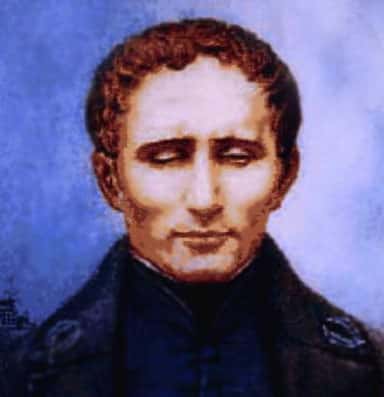
On January 4, 1809, a baby arrived in the picturesque French village of Coupvray — one who would eventually revolutionize the way millions of visually impaired people interact with the written word. That child was Louis Braille, whose determination and ingenuity led him to create a tactile reading and writing system that bears his name to this day. What he gave the world was nothing short of a lifeline for those living without sight.
When he was just three years old, Louis wandered into his father's harness workshop and suffered a devastating accident. An awl — a sharp instrument designed for piercing leather — punctured his right eye during play. What followed was a terrible infection that, despite the best medical intervention available, crossed over to his left eye as well. By the time Louis turned five, he had lost his vision entirely.
His parents refused to let blindness define their son's future. They enrolled him in the village school, where he proved himself an exceptional student despite his disability. By the age of ten, his talents earned him a scholarship to the Royal Institute for Blind Youth in Paris, among the world's first educational institutions dedicated to blind children. The reading method used there relied on embossed letters — a painstakingly slow and awkward approach that severely restricted students' engagement with literature.
Everything shifted in 1821 when Charles Barbier, a former army captain, presented the students with something called "night writing." This system employed raised dots arranged in a tactile format, originally conceived so soldiers could exchange messages silently in darkness. Clever as it was, Barbier's method proved too complicated for everyday practical use. This challenge sparked something in the young Braille, who — at the remarkable age of just 15 — reimagined the concept into a streamlined system built on six-dot cells. His version could encode letters, numbers, and even musical notation, empowering blind individuals to both read and write with impressive speed and precision.
Despite its brilliance, Braille's system met considerable pushback and failed to gain widespread acceptance while he was alive. Yet its transformative value could not be denied forever. In 1854, two years following his death, France granted the system official recognition. Fast forward to the present, and braille stands as a cornerstone of literacy for visually impaired people around the globe, translated into countless languages — and remarkably, still nearly identical to what its creator designed. That enduring relevance speaks volumes about the genius of Louis Braille.
The system Louis Braille brought into existence unlocked access to education, culture, and self-sufficiency for blind individuals everywhere. Each year on January 4, the world honors his memory through World Braille Day — a celebration of his birth and the extraordinary impact of his life's work.