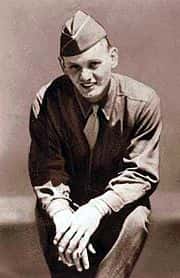
During World War II, Eddie Slovik became an unwilling soldier — a man with zero desire to serve who was pulled into the conflict against his wishes. Originally, his criminal background had earned him a 4-F classification, effectively shielding him from military service. But as the war against Hitler's forces ground on and manpower grew desperately short, the army relaxed its standards. Eddie Slovik was reclassified and thrust into uniform.
Making matters considerably worse, Slovik was trained as a rifleman — a cruel irony for someone who despised firearms. Before long, he shipped out to France for frontline duty. During the journey, he and a fellow soldier became separated from their unit and wandered until a Canadian military unit discovered them and handed them back to American forces. Although desertion charges were weighed, military officials ultimately dropped the matter, reasoning that inexperienced soldiers could easily become disoriented amid the chaos and cacophony of warfare. The two men were ordered back into combat. Yet this harrowing episode, layered on top of Slovik's deep-seated terror of battle and his aversion to weapons, set the stage for the fateful choice that lay ahead.
The moment Slovik was called upon to fight, he simply couldn't bring himself to do it. Terror consumed him — a paralyzing dread so intense that fleeing seemed preferable to facing it head-on. His commanding officers, perhaps incapable of truly grasping the depth of his fear, dismissed his desperate appeals. He deserted, only to come back the following day. Upon his return, he signed a written confession admitting to desertion and once more voiced his overwhelming fear. Even when an officer urged him to withdraw his confession, Slovik refused to back down.
Authorities presented Slovik with an opportunity to sidestep a court martial entirely: all he had to do was report immediately to the front line and take his place among the fighting men. He turned it down flat, insisting instead that his case be properly heard. But his steadfast refusal to engage in combat carried severe consequences. A court martial convicted him of desertion, and because his own actions had thrust his case into the spotlight, prosecutors seized on it as a cautionary tale. They maintained that executing Slovik was essential to discourage other soldiers from walking the same path. On January 31, 1945, that sentence was carried out, and Eddie Slovik was put to death.