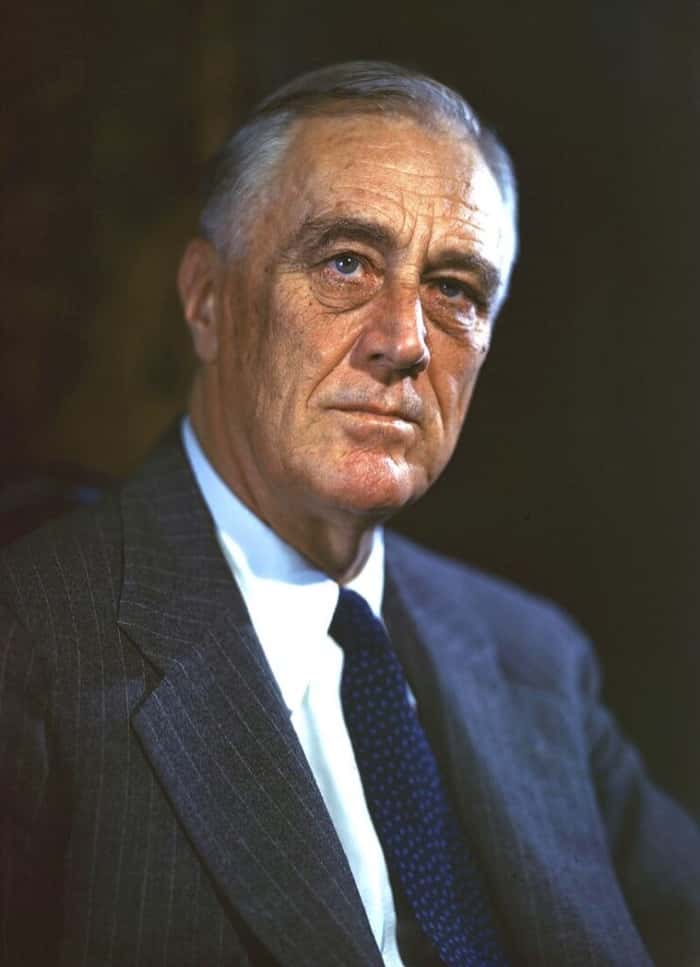
On January 30, 1882, in Hyde Park, New York, a child was born into a prominent family who would go on to reshape America — Franklin Delano Roosevelt. After earning his degree from Harvard University, he pursued legal studies at Columbia before launching himself into the political arena through the New York State Senate. His ascent continued as he took on the role of Assistant Secretary of the Navy throughout World War I, and by 1928, he had claimed the governorship of New York.
Life threw Franklin D. Roosevelt a devastating curveball in 1921 when polio left him permanently paralyzed from the waist down. Rather than retreating from public life, he channeled this hardship into a testament to his extraordinary willpower. He established a rehabilitation center in Warm Springs, Georgia, and threw himself back into politics with fresh energy and purpose. His refusal to be defined by his condition revealed a depth of character and determination that continues to inspire admiration in all who hear his story, even today.
Taking office as the 32nd President of the United States, Roosevelt inherited the staggering crisis of the Great Depression. He answered with the New Deal — an ambitious package of reforms designed to spark economic recovery while delivering essential social support to struggling citizens. Among these transformative measures were the creation of Social Security and job-generating public works projects, both of which left a huge impact on the nation. Through his distinctive 'Fireside Chats,' he spoke directly to the American people, kindling hope during their times of trial. When World War II unfolded, he steered the country onto a war footing and forged critical alliances with other nations. The American people returned him to office multiple times, a clear reflection of his strong leadership. Roosevelt's life came to an end on April 12, 1945, in Warm Springs, Georgia, but the legacy he left behind in American history proved anything but finite. Through innovative policies and dynamic leadership, he guided the United States through some of its most challenging times, leaving an enduring mark on the nation.