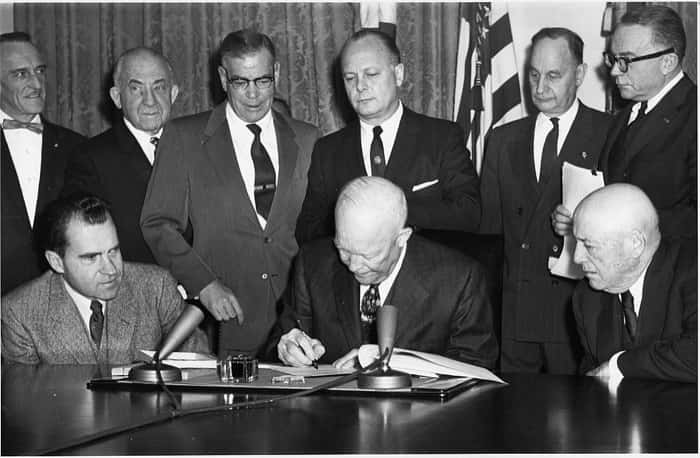
When President Dwight D. Eisenhower put his signature on an official proclamation on January 3, 1959, Alaska crossed the threshold into full statehood, becoming the 49th state in the Union. For years, residents of the territory had pushed hard to achieve this milestone. It was during World War II that American politicians truly grasped the strategic value of the vast northern land, giving the statehood movement a critical boost.
Without statehood, Alaskans living under territorial status lacked federal voting rights and had no congressional representation. The quest for statehood stretched back decades — Delegate James Wickersham put forward the very first statehood bill in 1916, though it went nowhere because Alaskan citizens themselves showed little enthusiasm at the time. Following World War II, Governor Ernest Gruening and Delegate Edward Lewis Bartlett reinvigorated the effort, galvanizing public support across the territory. Bartlett went on to introduce fresh statehood bills in both 1947 and 1950.
Powerful Republican Congressmen stood in the way, stalling the legislation until 1958. Their concern was political: Alaska's Democratic leanings meant new representatives who could shift the balance of power in Congress. To break the deadlock, Democrats brokered a compromise — Republican-leaning Hawaii would be granted statehood at the same time. With that deal in place, the Alaska Statehood Act cleared the House of Representatives on May 28, 1958, followed by Senate approval on June 30.
Eisenhower had harbored reservations about Alaska's closeness to Russia and the vast tracts of federally owned land within its borders, but he ultimately signed the bill into law on July 7. Alaskans then went to the polls on August 26 for a special vote reaffirming their desire to become a state, and the result was overwhelming — passing by a margin of six to one. The journey reached its conclusion on January 3, 1959, when Eisenhower signed the proclamation that officially welcomed Alaska as the 49th state.