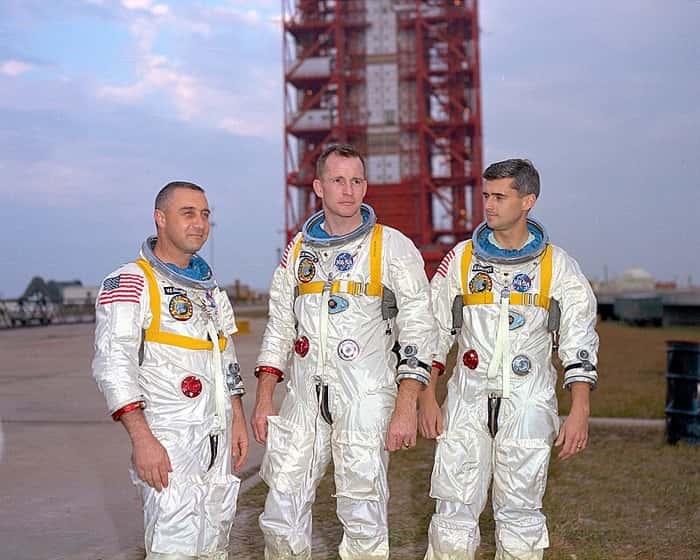
A devastating fire engulfed the Apollo 1 spacecraft on January 27, 1967, during what should have been a routine pre-launch test at Cape Kennedy Air Force Station in Florida. Three American astronauts — Virgil "Gus" Grissom, Edward H. White II, and Roger B. Chaffee — lost their lives in the disaster. The men had been selected for what was intended to be the Apollo program's first crewed flight, and they were conducting their test inside a cabin filled with a pure oxygen atmosphere when flames suddenly erupted. Ground crew members fought desperately to reach them, but the astronauts could not get out in time. In the wake of this devastating loss, NASA undertook sweeping reforms to both its safety protocols and spacecraft design, all with the goal of protecting the crews of future missions.
The test underway that day was known as a "plugs-out" test — essentially a simulated launch sequence in which the spacecraft ran entirely on its own internal power. As was standard practice at the time, the cabin had been pressurized with pure oxygen at a level exceeding normal atmospheric pressure. Then, at 6:31 PM, fire broke out within the command module. To this day, the precise cause has never been definitively established, though it is believed that faulty wiring or a short circuit could have been the reason. Fueled by the oxygen-rich environment, the blaze spread with terrifying speed, generating extreme temperatures and filling the module with thick smoke. Making matters worse, the hatch was designed to open inward, which made a rapid escape impossible and left the astronauts trapped.
Aftermath and Impact
In response, NASA initiated a thorough investigation that resulted in major overhauls to both spacecraft design and operational procedures, all focused on improving astronaut safety. The Apollo program was put on hold for shy of two years while these critical safety improvements were carried out. Although this pause pushed back the timeline for subsequent missions, the changes ultimately played a vital role in the success of later lunar landings. The Apollo 1 disaster served as a sobering reminder of just how dangerous space exploration can be, and its influence on the trajectory of future missions is impossible to overstate.
The sacrifice of Grissom, White, and Chaffee stands as a solemn testament to the dangers inherent in venturing beyond Earth's atmosphere. Their legacy lives on through the stringent safety standards and procedures that continue to safeguard astronauts to this day. For readers eager to explore the Apollo 1 tragedy and its consequences in greater depth, we recommend the article "Apollo 1 tragedy: The fatal fire and its aftermath" on Astronomy Magazine's website for a more detailed account.