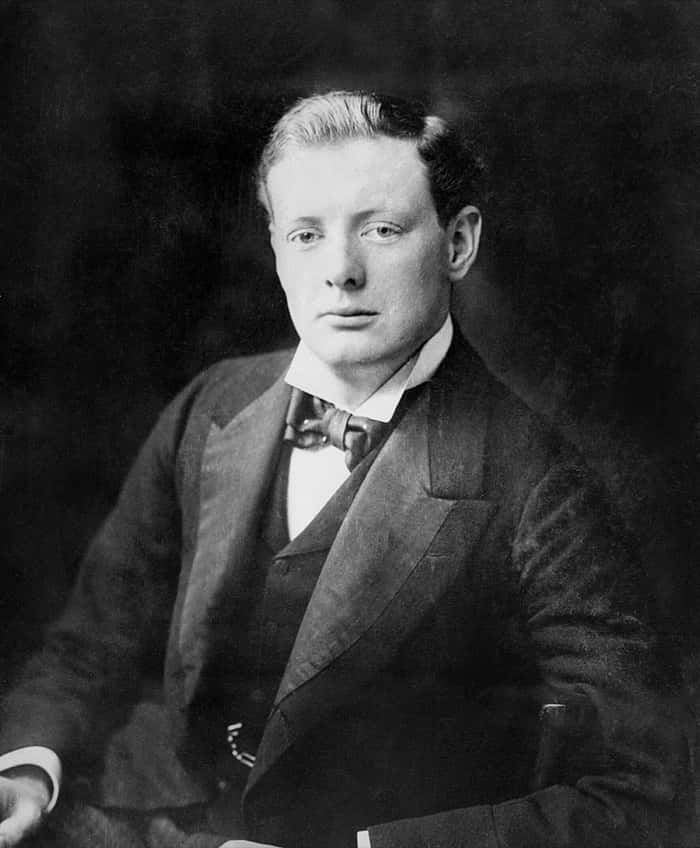
Winston Churchill passed away at his London home on January 24, 1963. His life was packed with remarkable achievements and dramatic turns, but nothing defined his legacy quite like his service as British prime minister during the Second World War. In that role, he steered not just Britain but the entire Allied coalition through one of history's darkest chapters.
His journey began with a military career, entering service in 1895 after being born in 1874. He saw action across India, South Africa, and the Sudan, earning distinction in multiple engagements. Yet the military couldn't hold him for long — after only a few years, he pivoted to politics. By 1911, he had risen to first lord of the admiralty, a position that placed much of Britain's World War I effort squarely on his shoulders. That tenure, however, came with devastating setbacks. The campaigns at Gallipoli and the Dardanelles proved catastrophic, with British forces taking heavy losses as a result of poor planning and strategic errors. Churchill, as head of the Admiralty, bore the blame for these failures, ultimately resigning and returning to military service.
But his political story was far from over. In the years following the war, Churchill continued serving in government — first as a cabinet member, then as secretary of state for war. Perhaps most notably during this stretch, he sounded the alarm about the rising threat of the German Nazi party. Tragically, the world ignored his warnings, a sobering testament to how costly it can be when prescient advice goes unheeded.
With the outbreak of World War II, Churchill was summoned back as first lord of the Admiralty. When Neville Chamberlain proved unable to lead effectively as a wartime prime minister, Churchill assumed the role himself. His legendary 'never surrender' speech galvanized the British people, and his diplomatic acumen proved equally vital — he forged a critical alliance bringing together the Americans and the Soviet Union. This ability to unite such formidable powers played a decisive role in securing Allied victory.
In the aftermath of the war, Churchill received the Nobel Prize in Literature and earned a knighthood from the Queen. He stayed active in political life until 1964, just a year before he died.