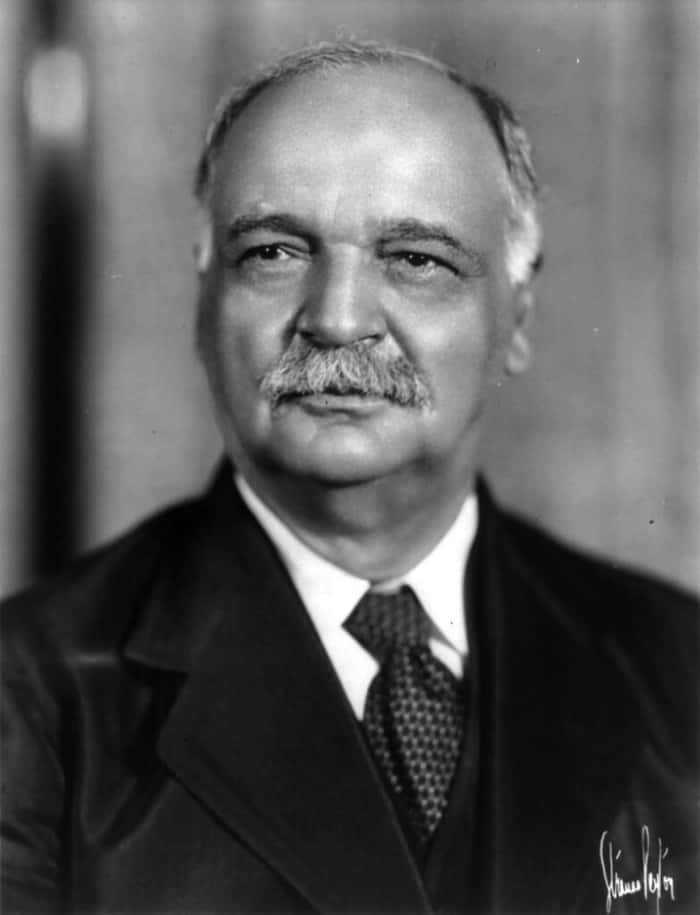
A member of the Kaw Nation, Charles Curtis made history on January 23, 1907, when he became the first Native American ever to serve in the United States Senate. His remarkable career in public life stands as an enduring symbol of perseverance and the fight for representation within the American political landscape.
Curtis came into the world in Kansas in 1860, carrying a rich blend of Kaw, Osage, and Potawatomi heritage. Growing up partly on a Kaw reservation gave him a profound bond with his Indigenous roots, even as he faced the wider struggles of life in 19th-century America. Prior to stepping onto the political stage, he dedicated himself to the legal profession, where he championed the rights of Native Americans. Through his command of complex legal systems, he fought tirelessly to secure justice for his community.
Political Achievements
- House of Representatives: In 1893, Charles Curtis launched his congressional career as a representative for Kansas, going on to serve multiple terms. Long before reaching the Senate, he had already earned a strong reputation as a talented legislator and adept coalition-builder.
- Senate Service: On January 23, 1907, Curtis officially assumed his seat as a U.S. Senator from Kansas. His Senate tenure lasted until 1913, after which he returned for an additional term spanning from 1915 to 1929.
Throughout his time in office, Curtis threw his weight behind infrastructure development, agricultural interests, and policies affecting Native Americans. Balancing the expectations of his broader constituency with his deep commitment to Native American communities was no easy feat, yet he persistently worked to honor both responsibilities despite the challenges he encountered.
Legacy
- First Native American Vice President: Following his distinguished Senate career, Curtis reached yet another historic milestone: in 1929, he became the first and only Native American to serve as vice president, holding the office under Herbert Hoover.
- A Moment of Progress: At a time when Indigenous voices were routinely pushed to the margins, Curtis's rise to the Senate represented a breakthrough moment for Native American visibility in U.S. politics.
- Dual Identity: His career underscored the intricate challenge of straddling multiple cultural identities on the public stage—simultaneously serving as a mainstream political figure and a representative of Indigenous peoples.
By taking his place in the Senate, Curtis broke through barriers that had long kept Native Americans out of the halls of government, lighting a path for future generations to seek leadership roles of their own. The swearing-in of Charles Curtis as a U.S. Senator on January 23, 1907, transcended personal triumph—it was a landmark moment for Native American representation in government. His life's arc speaks powerfully to resilience and the continuing pursuit of equity and inclusion in American politics.