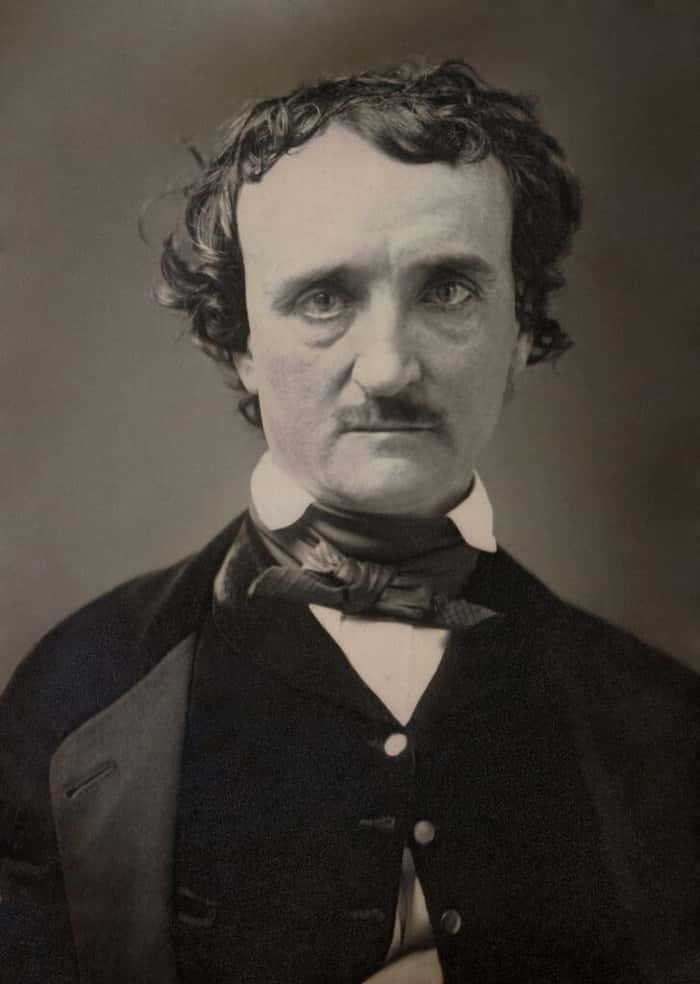
Born in Boston, Massachusetts, on January 19, 1809, Edgar Allan Poe would go on to become one of the most influential figures in American literary history. Though his life was shadowed by tragedy — including losing both parents at a young age — his extraordinary brilliance fueled a body of work that continues to captivate readers to this day. Poe is celebrated for his dark, haunting storytelling, crafting tales that plunge into the depths of the human psyche and grapple with love, death, and madness.
Interesting Facts:
- Orphaned by age 3: Edgar and his siblings were left without parents when David and Elizabeth Poe, both actors, died young. Yet despite this devastating start in life, Poe's fierce determination and resilience propelled him forward, ultimately forging the path of a literary giant.
- Adopted by the Allans: Poe was taken in by John and Frances Allan of Richmond, Virginia.
- Education and estrangement: Financial difficulties forced Poe to drop out of the University of Virginia, sparking a permanent rift with his foster father, John Allan, a wealthy tobacco merchant. This fractured relationship cast a long shadow over both Poe's personal life and professional career.
- The inventor of detective fiction: With his short story The Murders in the Rue Morgue, Poe essentially created the modern detective story — a groundbreaking achievement that inspired countless imitators in the genre.
- A pioneer of psychological horror: Through works such as The Tell-Tale Heart and The Fall of the House of Usher, Poe masterfully explored the dark terrain of guilt, fear, and madness.
- Poetic brilliance: When The Raven appeared in 1845, it launched Poe into the spotlight. Its mesmerizing refrain, "Nevermore," has reverberated through literary history ever since, becoming a staple of high school and college literature courses.
- Editor and critic: Beyond his fiction and poetry, Poe earned a reputation as a razor-sharp literary critic, renowned for his incisive reviews and his passionate drive to elevate American literature.
In 1849, Edgar Allan Poe passed away in Baltimore under circumstances that remain shrouded in mystery — a fitting end for a man whose writing thrived on enigma. His influence on literature is impossible to overstate, having inspired iconic writers such as H.P. Lovecraft, Arthur Conan Doyle, and Stephen King. The Edgar Awards, named in his honor, continue to celebrate excellence in the mystery and thriller genres. Poe endures as a towering literary figure, a reminder of the beauty and terror woven into the fabric of human experience.