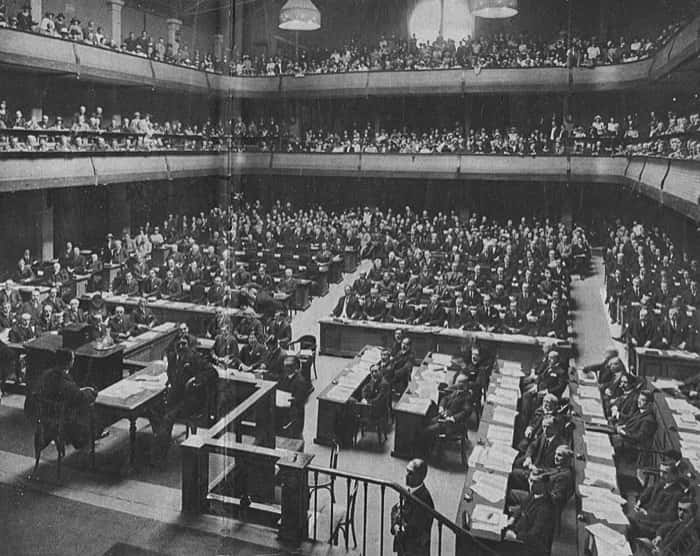
When representatives gathered in Paris on January 16, 1920, for the League of Nations' inaugural assembly, it was nothing short of a watershed moment for global diplomacy. Born from the ashes of World War I, this bold experiment in international cooperation set out to preserve peace and encourage nations to work together. And while the organization ultimately ran into serious obstacles, it blazed a trail that would eventually lead to the creation of the United Nations.
Established through the Treaty of Versailles, the League holds the distinction of being the very first international body dedicated to preventing armed conflict and nurturing collaboration on a worldwide scale.
Fun Facts about the League of Nations:
- World War I's devastating toll was the driving force behind the League's creation — its founders were determined to confront the war's catastrophic aftermath and ensure nothing like it could happen again.
- Delegates from 44 member states came together in Paris for that historic assembly, and notably, smaller nations that had previously lacked a voice on the world stage were included — a meaningful leap forward for inclusivity in global affairs.
- Peaceful resolution of disputes and oversight of disarmament were central to the League's mission, but its ambitions stretched further still, encompassing efforts to improve global welfare through health, labor, and humanitarian aid initiatives that inspired genuine hope.
- For all its noble aspirations, the League found it enormously difficult to enforce its resolutions. This weakness was compounded by the fact that major powers like the United States never became members, while other nations gradually withdrew.
- The League formally dissolved in 1946, yet its legacy endures — it established the foundation upon which the United Nations was built, an organization that carries forward the pursuit of peace and international cooperation to this day.
- Geneva, Switzerland served as the League's home base, with the iconic Palais des Nations functioning as its headquarters — a building that remains a vital hub for international diplomacy even now.
- That first assembly represented something truly audacious: a collective stride toward global unity that spoke to one of humanity's most deeply held aspirations — the enduring hope for a peaceful world.