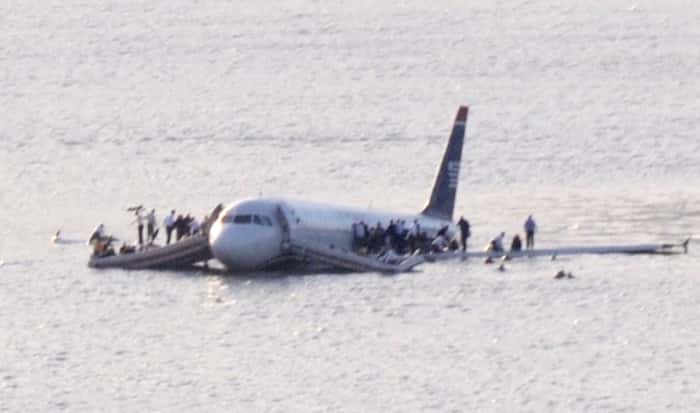
What unfolded on January 15, 2009, could easily have ended in catastrophe — but instead, it became one of the most remarkable survival stories in aviation history, forever known as the "Miracle on the Hudson." US Airways Flight 1549, an Airbus A320 headed for Charlotte, North Carolina, had just lifted off from New York's LaGuardia Airport when it flew directly into a flock of Canada geese. Within moments, both engines were knocked out. At the controls, Captain Chesley "Sully" Sullenberger and First Officer Jeffrey Skiles found themselves confronting a nightmare scenario: a powerless aircraft rapidly losing altitude with no thrust to speak of.
A Critical Decision
Turning back to LaGuardia wasn't an option, and reaching an alternate airport was out of the question. Captain Sullenberger made the call — the Hudson River would be their runway. In a composed exchange with air traffic control, he delivered the now-iconic words: "We're gonna be in the Hudson."
Pulling off a water landing ranks among the most demanding maneuvers any pilot can attempt. The margin for error is razor-thin, and even the smallest miscalculation can prove fatal. Working in seamless coordination, Sullenberger and Skiles held the aircraft level and stable throughout the harrowing descent.
The plane made contact with the frigid Hudson River at 3:31 PM. Against all odds, the fuselage held together, and every single one of the 155 passengers and crew on board — who had surely been bracing for the worst — felt an overwhelming surge of relief upon realizing they had made it through alive.
What happened next was equally extraordinary. Ferry operators, first responders, and everyday New Yorkers leaped into action with awe-inspiring speed and bravery. Boats and ferries converged on the downed aircraft, pulling passengers from the wings and plucking others from life rafts bobbing in the water. The swift, coordinated rescue effort ensured that every person on board was brought to safety.
Captain Sullenberger, already a seasoned aviator, was celebrated alongside his co-pilot, the cabin crew, and the rescuers as heroes of the highest order. Beyond the accolades, the incident sparked meaningful improvements in aviation safety — from stepped-up wildlife management programs near airports to a renewed emphasis on emergency water landing procedures. These changes sent a clear message to the flying public that the industry was determined to learn from this extraordinary event.