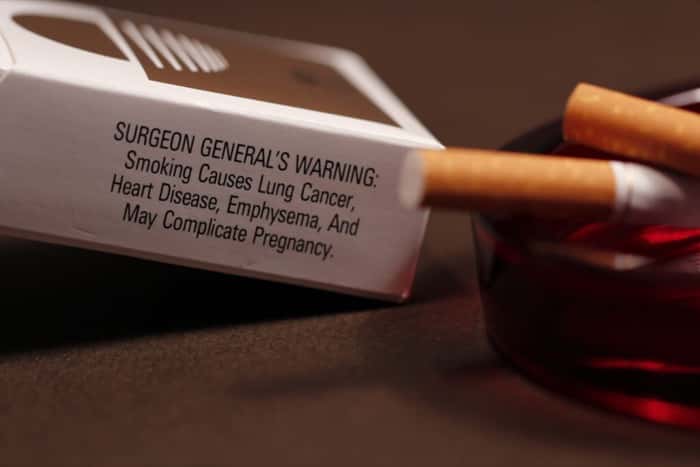
It's hard to overstate just how much the world changed on January 11, 1964, when U.S. Surgeon General Luther Terry unveiled a landmark document that would forever alter the public's relationship with tobacco. Titled "Smoking and Health: Report of the Advisory Committee to the Surgeon General of the Public Health Service," this sweeping report drew on a rigorous analysis of more than 7,000 scientific articles to establish a definitive connection between cigarette smoking and serious health conditions such as lung cancer and heart disease. In doing so, it shone a harsh spotlight on the scale of the smoking epidemic and ushered in a new era of public health consciousness.
At the heart of the report lay a painstaking examination of over 7,000 scientific publications exploring the ties between tobacco use and human health. After weighing the evidence, the Advisory Committee arrived at several stark conclusions about cigarette smoking:
- Can cause lung cancer and laryngeal cancer in men.
- Is a probable cause of lung cancer in women.
- The most important cause of chronic bronchitis.
The implications were impossible to ignore. The committee's findings left no room for doubt: smoking represented a serious health hazard that demanded corrective action. The report quickly became one of the biggest news stories of 1964, reshaping how Americans thought about lighting up. The behavioral shift was dramatic — per capita cigarette consumption fell by 18% compared to the previous year, a clear sign that the message was getting through.
Long-Term Consequences:
What followed the 1964 report was a cascade of legislative and public health measures designed to curb tobacco use across the country:
- 1965: Congress passed the Federal Cigarette Labeling and Advertising Act, which mandated that all cigarette packages carry the warning: "Caution: Cigarette Smoking May Be Hazardous to Your Health."
- 1969: The Public Health Cigarette Smoking Act went a step further, prohibiting cigarette advertising on television and radio and significantly diminishing the tobacco industry's reach.
- 1973: Arizona broke new ground as the first state to pass legislation requiring designated smoking areas in public spaces, laying the groundwork for the wave of smoke-free policies that would follow.
The ripple effects of the 1964 Surgeon General's report have echoed across six decades and counting. What had once been a widely accepted social habit was recast as a genuine public health menace. By fueling continued research, educational campaigns, and policy reform, the report's conclusions drove dramatic reductions in smoking rates and are credited with saving countless lives in the years since.