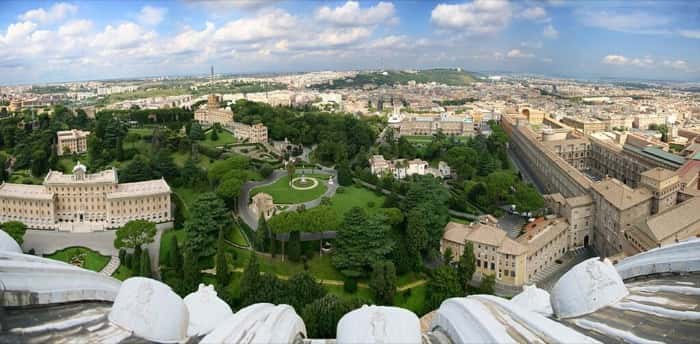
On January 10, 1984, a 116-year gap in formal diplomacy came to an end when the United States and the Vatican officially restored their diplomatic relationship. It was a remarkable moment — the world's most powerful democracy reconnecting with the smallest independent state in a move that would reshape their shared trajectory.
At the heart of this diplomatic renewal stood President Ronald Reagan, who had come to appreciate the Vatican's increasingly prominent place on the world stage. Reagan held deep admiration for Pope John Paul II, a fierce champion of human rights who played a critical role in the fight against communism, particularly in Eastern Europe. What drew these two leaders together was a common determination to counter Soviet influence and champion freedom — a shared mission that laid the groundwork for restoring formal ties.
A Rocky History
Things between the U.S. and the Vatican hadn't always been smooth. Back in 1867, Congress moved to prohibit official diplomatic relations with the Holy See, driven by worries over maintaining the separation of church and state. Behind this decision lay the strong anti-Catholic sentiment running through 19th-century America, where many harbored deep fears that the pope's influence could threaten the foundations of American democracy.
What followed was more than 100 years of making do with informal channels. While presidents would from time to time dispatch personal envoys to the Vatican, no official ambassador served as a representative. As the late 20th century unfolded, however, shifting global realities and the Holy See's expanding role in international affairs made this informal arrangement feel increasingly inadequate.
The Turning Point
Reagan chose to act decisively. He recognized the Vatican's considerable sway in global politics — particularly under the stewardship of Pope John Paul II — and saw a chance to bolster the West's moral standing in its ideological confrontation with the Soviet Union.
Not everyone welcomed the move to formalize relations, though. Detractors contended that it compromised the boundary between church and state. On the other side, proponents highlighted the Vatican's distinctive role as both a neutral diplomatic actor and a powerful moral voice on the international stage.
The Impact
The timing of this decision carried real weight. Cold War tensions ran high throughout the 1980s, and the Vatican's moral leadership proved to be an invaluable force in the struggle against communism. The work of Pope John Paul II — particularly his support for Poland's Solidarity movement — dovetailed with U.S. policies aimed at advancing freedom and democracy around the globe.
In the years since, the U.S.-Vatican relationship has evolved to encompass pressing global concerns, from fighting poverty to tackling climate change and promoting peace. What happened on January 10, 1984, stands as a powerful reminder that diplomacy is often shaped by the interplay of power, shared values, and moral leadership.