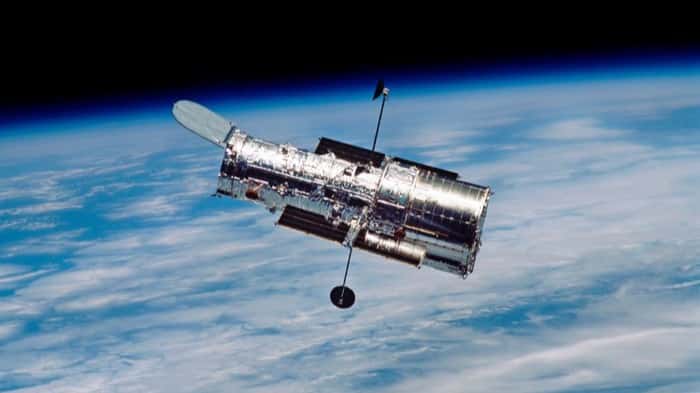
On April 25, 1990, the Hubble space telescope soared into orbit, setting the stage for a transformation in astronomical science that would prove nothing short of permanent. What's fascinating is that, on paper, the Hubble didn't seem all that groundbreaking. There was no revolutionary telescope design at its core — it relied on the same fundamental principles that telescope builders had employed for centuries, utilizing a design that actually dated back to the 1940s. It wasn't even the first telescope to operate from space. Yet a combination of modest but critical advantages over other telescopes came together to produce something truly revolutionary for astronomy.
Its sheer size was one key factor, since larger telescopes deliver superior resolution. Beyond that, it was assembled using technology that represented the cutting edge of its era. Its orbital positioning also played a crucial role, liberating it from the light pollution and cloud cover that hamper telescopes stationed on Earth's surface. The cumulative result? A resolution ten times greater than what ground-based telescopes could achieve. On top of all that, the Hubble carried an impressive suite of specialized sensors capable of seeing well beyond visible light, capturing images across both the infrared and ultraviolet portions of the spectrum.
The breathtaking and richly detailed imagery delivered by the Hubble has empowered scientists to pin down the precise rate at which the universe is expanding and to work out the size and mass of our Milky Way galaxy. Beyond that, researchers have captured views of Pluto's surface, witnessed a comet slamming into Jupiter, peered at distant galaxies and black holes, and even glimpsed the universe as it appeared billions of years ago.
Circling the Earth at approximately 600 km, or 332 miles, above the surface, the Hubble sits at a carefully chosen altitude. Any lower, and it would periodically brush against faint traces of Earth's atmosphere — enough, over time, to gradually slow the telescope and eventually drag it out of orbit. By maintaining that 600 km / 332-mile altitude, the Hubble remains far enough from the atmosphere to sustain its orbit for an exceptionally long duration.