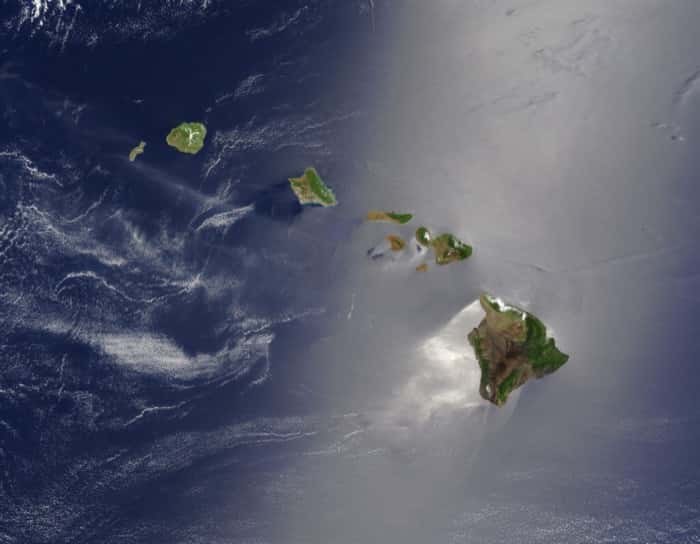
On July 7, 1898, a joint resolution passed through Congress that officially folded Hawaii into the United States as a territory. This moment capped off a long campaign — spanning decades — to dismantle the island nation's monarchy. For President William McKinley, it was actually his third attempt. His earlier two efforts, both structured as treaties, had collapsed in the face of protests from Hawaiian citizens and their deposed queen. But the political landscape shifted after the Spanish-American war, and lawmakers had a change of heart. McKinley pivoted to a joint resolution this time around, a strategic move that required only a simple majority vote instead of the 2/3 majority a treaty demanded. The controversial maneuver worked, and Hawaiian natives were left to grieve.
Back in 1846, the world took notice when the United States formally recognized Hawaii's independence, sparking an international scramble for trade agreements with the island nation. By the early 1870s, American merchants and missionaries had grown into a significant portion of the Hawaiian population. Then, in 1887, Hawaii agreed to lease Pearl Harbor to the U.S. Navy in exchange for seven years of tariff reciprocity.
In that very same year, an armed rebellion compelled the Hawaiian king to put his name on a new constitution — one that reduced him to a figurehead and stripped many natives of their right to vote. When Queen Lili'uokalani ascended to the throne in 1891, she set out to rewrite what had become known as the "Bayonet Constitution." Her efforts were swiftly cut short by a coup d'état, driven largely by American businessmen and apparently supported by their military.
President Grover Cleveland insisted on an investigation, which ultimately concluded that the U.S. had illegally deposed the queen. Yet his push for reparations lost momentum and was eventually abandoned altogether. That left McKinley free to chart his own course. Although Hawaii became an American territory through its 1898 annexation, statehood wouldn't come until 1959. Looking back a century after the overthrow, Congress passed the Apology Resolution in 1993, formally acknowledging the United States' active participation in what had transpired and expressing remorse to mark the 100th anniversary.