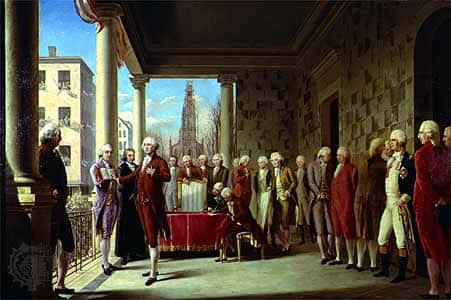
On April 30, 1789, the United States witnessed a moment unlike any before — George Washington took the oath of office as the nation's first President. Remarkably, this historic event wasn't even supposed to take place on that particular day, but in those early years of the republic, things had a way of going sideways.
The plan had been to hold the inauguration on the first Wednesday in March. That timeline fell apart, though, when an unseasonably cold and snowy March made travel a nightmare for members of the First Federal Congress trying to reach New York, which served as the seat of government at the time. Their presence mattered enormously: the Constitution mandated that the House and Senate count the electoral votes for President, and a quorum was required before that could happen. More than a month would pass before enough legislators finally arrived to carry out the vote count.
When the tally was at last conducted on April 6, the outcome left no room for debate — Washington had captured all 69 electoral votes. Word of his victory was sent to him, and he set off for New York. Along the route, enthusiastic crowds lined his path, showering him with flowers and cheering as bells rang out in every city he passed through.
Once Washington reached New York, the oath of office was administered on April 30 before a crowd assembled at Federal Hall. With the oath complete, he proceeded to the Senate chamber to deliver what would become the first inaugural address ever given, speaking to the gathered members of both chambers of Congress. In his remarks, Washington reflected on how humbling it was to be selected as President. He went on to underscore the shared duty of the President and Congress in preserving "the sacred fire of liberty."