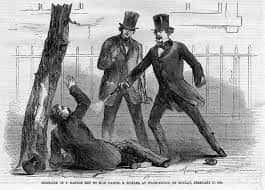
On April 26, 1859, a groundbreaking moment in legal history unfolded when Dan Sickles became the first person ever to successfully employ the "temporary insanity" defense against a murder charge. But while the legal strategy broke new ground, the circumstances surrounding the case were far more sensational than the precedent it set.
Consider the cast of characters: the man who pulled the trigger, Dan Sickles, held a seat in Congress. His victim, Philip Barton Key, served as the U.S. Attorney for the Washington District. And where did this deadly confrontation take place? Directly across the street from the White House, no less. Making matters even more dramatic, the two men had once been close friends. What drove Sickles to kill? He had recently discovered that Key was carrying on an affair with his wife. While confronting her about the betrayal, Sickles spotted Key outside, attempting to catch his wife's attention.
A powerhouse legal team of 8 renowned and highly influential lawyers rallied to Sickles' defense, and the prosecution was effectively outmatched from the start. Never mind that Sickles himself had carried on his own affair for years, or that he was widely known for his violent temper, or that he had shown clear premeditation by pausing to arm himself with three guns before pursuing Keys. His defense team crafted a compelling narrative: the revelation of his wife's infidelity had wounded and enraged him so deeply that he snapped into a temporary state of insanity — a blind frenzy in which he had no awareness of his own actions. On top of that, the lawyers skillfully redirected the trial's focus onto Keys and his alleged moral failings. By the time proceedings concluded, newspapers were actually expressing gratitude toward Sickles for "saving all the ladies of Washington from this rogue named Key." The jury's verdict? Not guilty.