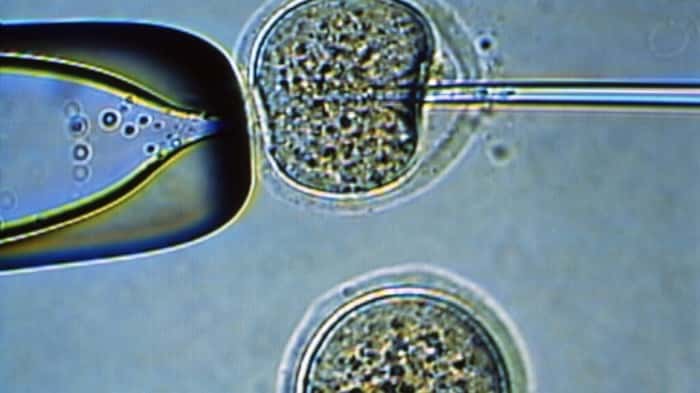
It was on May 16, 2013, that scientists achieved a landmark breakthrough: the first successful cloning of human embryonic stem cells. This milestone arrived nearly seventeen years after Dolly the sheep made history as the first mammal ever successfully cloned. Dolly had been produced using an adult somatic cell — a mammary cell, to be precise — and the leap from cloning sheep to generating human stem cells relied on essentially the same fundamental technique.
Known as nuclear transfer, the method works by stripping the existing DNA out of an unfertilized egg and then introducing the DNA that researchers want to clone. To illustrate, a scientist aiming to clone a sheep would need to obtain two things: 1.) an unfertilized egg harvested from a female organism and 2.) somatic cells taken from the organism intended for cloning. First, the genetic material already present in the unfertilized egg is removed. Then the DNA housed within the nucleus of the somatic cell — its core genetic blueprint — is transferred into that emptied egg.
For all its technical elegance, the procedure succeeds only on rare occasions. In those cases where it does work, the egg carrying its new DNA payload begins dividing in a normal fashion, ultimately developing into a complete organism. Through nuclear transfer, researchers have managed to produce Dolly the sheep, multiple cows, two monkeys, and — most notably — embryonic human stem cells. Still, cloning as a broader scientific pursuit continues to stir deep debate. Critics argue that scientists involved in this kind of research are "playing God," whereas supporters point to the potential medical breakthroughs that such experimentation could one day unlock.