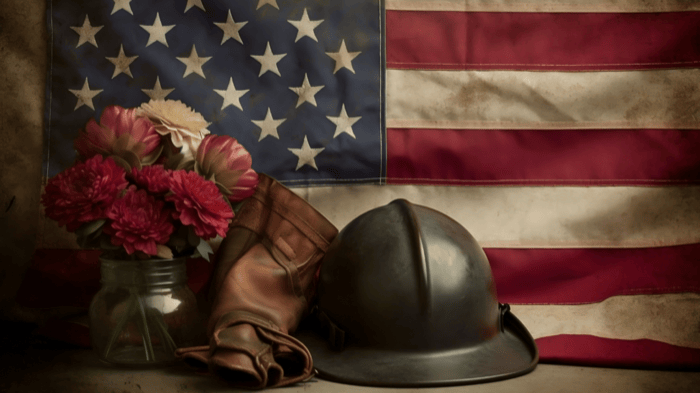
On May 30, 1868, Americans observed what would become known as Memorial Day for the first time — though back then, people called it "Decoration Day." The precise origins of this tradition have been lost to time, but it appears to have grown out of several smaller, local observances scattered throughout the country. What they all shared was a deep connection to the Civil War.
What set the Civil War apart in American history was a sobering reality: every single casualty, on both sides, was an American. The staggering toll of 600,000 casualties left communities drowning in grief long after the fighting stopped. All across the nation, families and friends who had lost loved ones began visiting soldiers' graves and adorning them with decorations.
What started as quiet, personal acts of mourning gradually evolved into broader community gatherings. Boalsburg, Pennsylvania, holds that it gave birth to Memorial Day, pointing to a ceremony held on July 4th, 1864, in which townspeople decorated soldiers' graves. In Charleston, SC, an African American community gathered on May 1st, 1865, to honor fallen soldiers in what some consider the true origin of the holiday. Others trace its beginnings to April 25, 1866, when women in Columbus, MS, placed flowers on the graves of both Union and Confederate soldiers without distinction. Yet it was Waterloo, New York, that received official recognition in 1966, when President Lyndon Johnson declared it the birthplace of Memorial Day. The town had held its own observance on May 5, 1866, shutting down all businesses and decorating soldiers' graves to honor those who had fallen.
It was John A. Logan, leader of the Grand Army of the Republic Civil War veterans' organization, who made things official on May 5, 1868, proclaiming that May 30 would be observed as Decoration Day going forward. His choice of date was deliberate and telling — May 30 didn't mark the anniversary of any battle. Logan's intention was to center the occasion around peace rather than conflict.