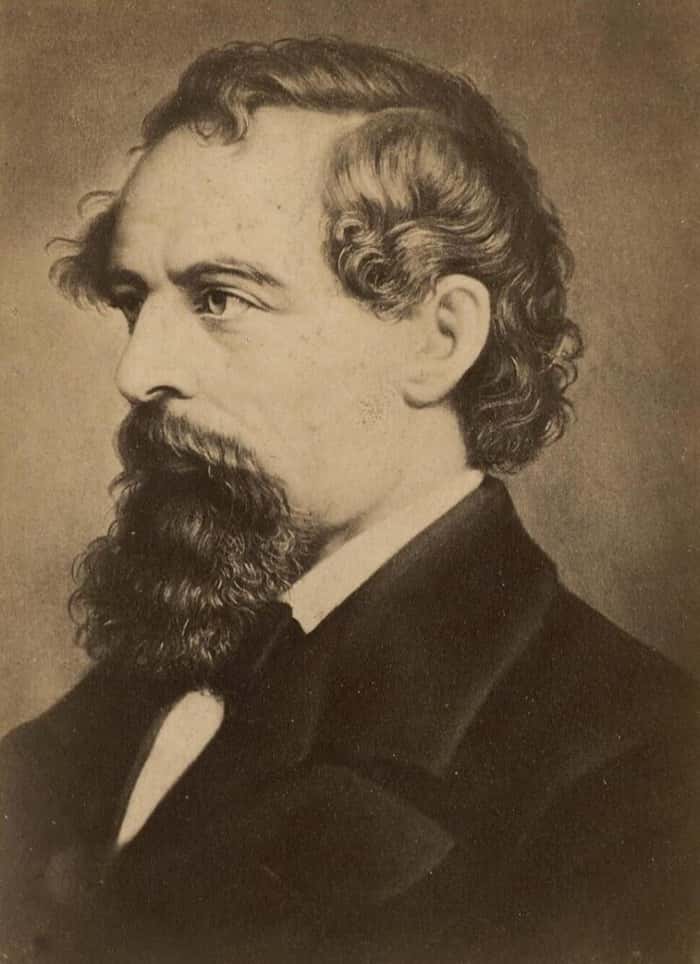
On this day in history, the world welcomed Charles John Huffam Dickens, who arrived on February 7, 1812, in Portsmouth, England. He would go on to earn his place as one of the Victorian era's most celebrated novelists.
Dickens's childhood was anything but easy. When his father landed in prison for debt, a 12-year-old Dickens had no choice but to abandon his schooling and take up work in a boot-blacking factory — an experience that left a deep imprint on his life and profoundly shaped his future writing. Yet despite these formidable obstacles, his resilience was remarkable. He educated himself and made his way into journalism, and when The Pickwick Papers began its serial publication in 1836, his literary career took flight. That breakthrough was a testament to his unwavering determination. From there, he produced a string of powerful novels — among them "Oliver Twist," "David Copperfield," and "Great Expectations" — each shining a spotlight on the social issues and injustices that defined his time.
Hundreds of years later, the influence of Dickens's work endures. His novels remain required readings at various educational institutions and have been adapted across various media. The vivid characters he created and his keen observations of society have left an indelible mark on the literary world. So lasting is his impact that the word "Dickensian" has woven itself into the language, used to describe situations that mirror his writings — particularly those depicting poor social or working conditions.
His legacy lives on at the Charles Dickens Museum in London, housed in his former residence. There, visitors can explore a vast collection of artifacts, from personal letters to his writing desk, gaining intimate insights into both his life and the era he portrayed so vividly. It remains a place where admirers can forge a genuine connection with this literary giant.