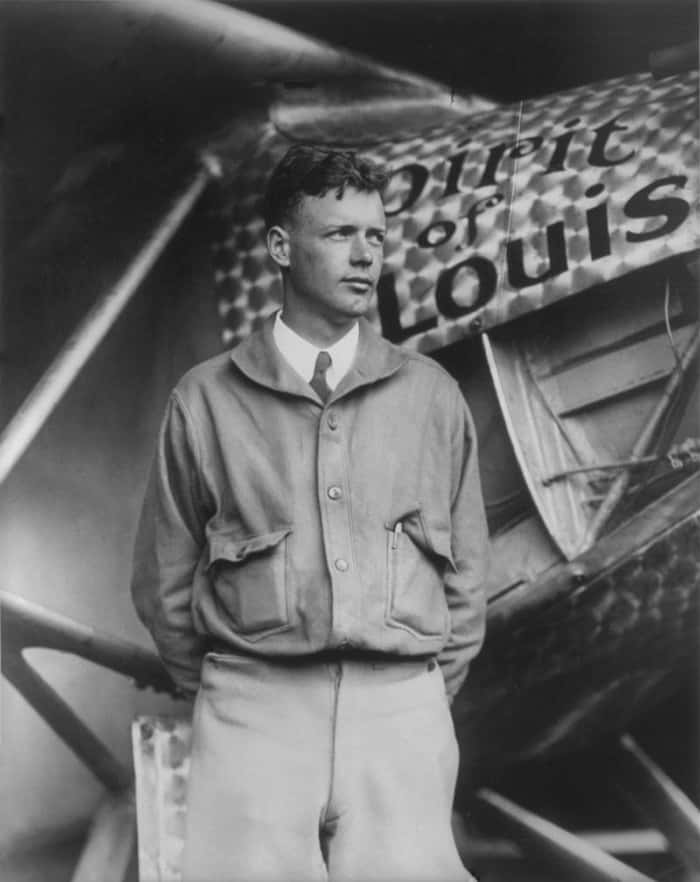
On February 4, 1902, Charles Augustus Lindbergh came into the world in Detroit, Michigan. Over the course of his remarkable life, he would rise to become one of the most recognized figures on the planet, celebrated far and wide for his pioneering contributions to aviation. Between his audacious solo crossing of the Atlantic and a legacy that defies simple characterization, Lindbergh's story continues to resonate through the decades. Read on to learn more about what made Charles Lindbergh such a revered — and complex — figure.
Early Life
- Roots in the Midwest: Growing up on a Minnesota farm, the young Lindbergh developed an early affinity for mechanics and a deep curiosity about the wider world. These formative experiences on the family homestead would ultimately fuel his revolutionary accomplishments in the skies.
- Engineering background: A natural fascination with machinery drew Lindbergh to the University of Wisconsin-Madison, where he enrolled to study engineering. However, the pull of flight proved too strong, and he eventually left college to chase his true calling.
- Learning to fly: It was at a flight school in Lincoln, Nebraska, that Lindbergh first took the controls of an airplane and began his path toward becoming a pilot. His remarkable talent and unwavering commitment made him stand out almost immediately, launching an early career as a barnstormer — thrilling crowds with aerial stunts and offering adventurous passengers rides through the open sky.
The Transatlantic Flight
The year 1927 saw Lindbergh throw his hat into one of aviation's most thrilling competitions: the quest to achieve the first nonstop solo flight across the Atlantic Ocean. At stake was the $25,000 Orteig Prize, which had been established as a reward for the first aviator to complete a non-stop journey between New York and Paris, in either direction. For this monumental attempt, Lindbergh relied on The Spirit of St. Louis, a custom-built, single-engine monoplane engineered specifically for long-distance travel, with an emphasis on fuel efficiency and simplicity of design.
Departing from Roosevelt Field in New York on May 20–21, 1927, Lindbergh touched down at Le Bourget Field near Paris after an epic journey spanning 3,600 miles and lasting 33 hours and 30 minutes. Overnight, the young aviator became a worldwide sensation. A wave of honors followed, from massive parades to prestigious awards, among them the Medal of Honor and the French Legion of Honor.
Legacy
The ripple effects of Lindbergh's transatlantic crossing were enormous, sparking major advancements in aviation technology and igniting widespread public excitement about the possibilities of air travel. As the years went on, Lindbergh channeled his passion into a new cause: environmentalism. He became a vocal advocate for the protection of endangered species and the preservation of natural habitats, with his efforts to spotlight the struggle of the American bald eagle standing out as an especially meaningful chapter of his later work. Marked by both extraordinary triumphs and deep controversies, Lindbergh's life endures as a fascinating narrative of ambition, accomplishment, and irreducible complexity. His autobiography, The Spirit of St. Louis, earned the Pulitzer Prize in 1954.