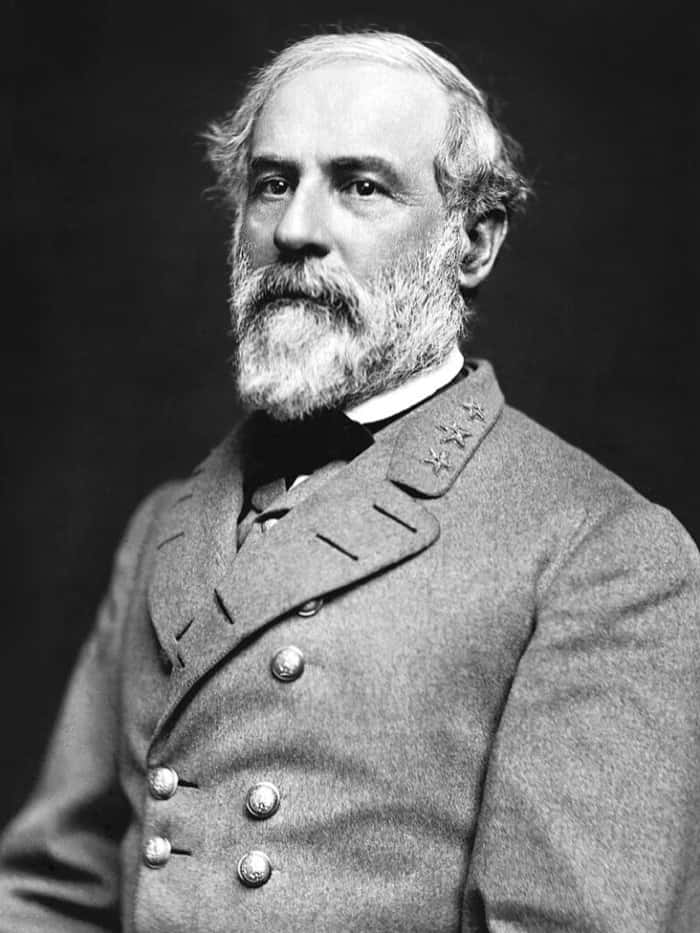
The Confederate forces gained a new general-in-chief on February 4, 1865, when Robert E. Lee was chosen for the position. This appointment didn't come easily — fierce arguments over whether such a role should even exist had persisted since February of 1862. Confederate President Jefferson Davis had long resisted the idea, worried that it would concentrate too much power in the hands of a single individual, independent of presidential authority. By 1865, however, Lee's remarkable track record commanding the Army of Northern Virginia had made him the undeniable choice.
When the Civil War broke out, Lee — a veteran with 30 years of military service — faced an agonizing personal conflict. Secession was something he opposed, yet he could not bring himself to act against Virginia, the state to which his loyalty ran deep. Ultimately, Lee chose to resign his commission in the U.S. Army and turned down an offer to command the Union forces, opting instead to serve as a military adviser to President Davis. Command of the Army of Northern Virginia would follow the next year.
Through ingenious tactical maneuvers, Lee secured a number of critical victories on behalf of the South. His campaigns in the North, though, ended badly. By the time President Davis finally consented to naming Lee general-in-chief, the Civil War was winding down. The appointment served less as a true promotion and more as formal recognition of the contributions Lee had made throughout the conflict.
The legacy Robert E. Lee left behind remains deeply complicated. He is widely regarded as one of history's most gifted military strategists, yet he fought in defense of secession and slavery. In the postwar years, he became a vocal champion of reconciliation and peace, all while continuing to hold firm to his belief in white supremacy. How he should be remembered is a question that sparks debate to this day.