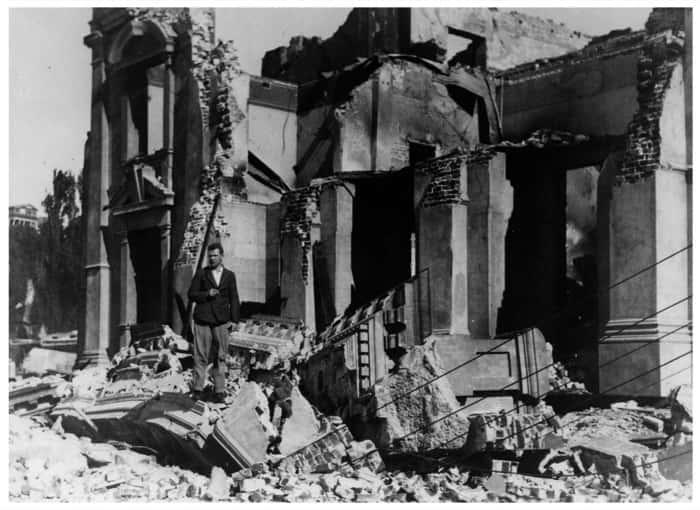
On the morning of February 3, 1931, at 10:47 a.m., the deadliest natural disaster in New Zealand's history struck without warning. A massive 7.8-magnitude earthquake on the Richter scale tore through the Hawke's Bay region on the North Island, flattening cities, taking countless lives, and reshaping the very ground beneath people's feet. Centered near Napier, the quake sent tremors rippling across much of the North Island — a testament to just how enormous this catastrophe truly was.
In both Napier and Hastings, buildings crumbled in mere seconds. Structures built from unreinforced masonry proved particularly defenseless against the shaking. To make matters worse, fires erupted in the aftermath, magnifying the destruction many times over. When the toll was finally counted, 256 people had lost their lives and thousands more suffered injuries. Victims found themselves buried beneath collapsed buildings or engulfed by the flames that raged through Napier.
A Changed Landscape
Beyond the human toll, the 1931 earthquake dramatically reshaped the physical terrain itself. The Ahuriri Lagoon — once a vast tidal area — rose by nearly 2 meters, giving rise to 40 square kilometers of entirely new land. Just like that, a single seismic event permanently redrew the region's geography, transforming local ecosystems and land use patterns in ways no one could have anticipated.
Remarkably, no significant tsunami materialized in the wake of such a powerful quake — a rare stroke of fortune. The shallow angle of the fault slip is what likely prevented a devastating wave from forming. Still, the human suffering was immense: more than 20,000 residents found themselves without homes, forced to shelter in makeshift camps and tents for weeks on end. In the longer term, the disaster became a turning point for New Zealand's building codes, driving a sweeping push toward earthquake-resistant construction designed to reduce casualties in future events.
The Aftermath
Standing as one of New Zealand's most consequential disasters, the 1931 earthquake fundamentally shaped how the nation thinks about disaster preparedness and emergency response. From the rubble, the communities of Napier and Hastings rose again — rebuilt with greater resilience and bound together by a deeper sense of unity.