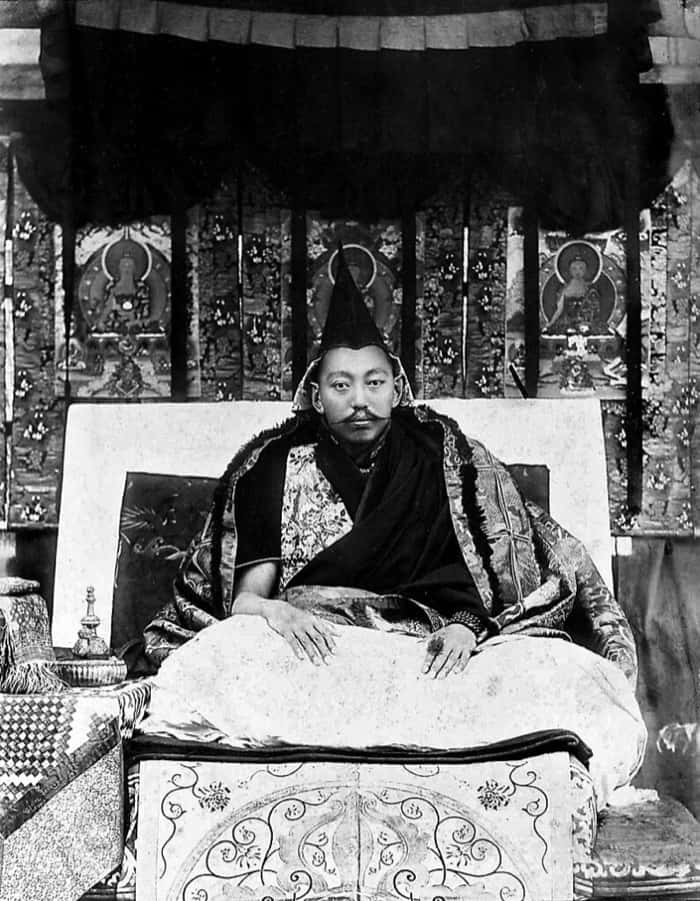
When Chinese forces marched into Lhasa on this day in 1910, the 13th Dalai Lama made the daring decision to escape Tibet and take refuge in British India. This dramatic flight became a pivotal moment in Tibet's ongoing resistance to foreign domination, leaving a lasting imprint on the region's modern political trajectory.
February 25, 1910, plunged Tibet into turmoil. Thubten Gyatso, the 13th Dalai Lama, found himself with no choice but to abandon his homeland as Qing dynasty soldiers swept into Lhasa, determined to impose Chinese authority over both the territory and its spiritual leader. Facing a direct threat to his life, he made the perilous journey to British India — a move that launched a period of exile destined to reshape Tibet's political future in profound ways.
China's invasion fit into a larger campaign to tighten its grip on Tibet, a region that had long operated with de facto independence. Yet rather than crushing the Tibetan spirit, the Dalai Lama's flight had the opposite effect — it galvanized resistance. When the Qing dynasty collapsed, he returned in 1913, serving as a beacon of hope for his people. His comeback reaffirmed Tibet's autonomy, and he set about pursuing modernization efforts that held the promise of a new era for the region.
Fun Facts:
- His Holiness the 13th Dalai Lama was born on 12th February 1876.
- He died on December 17, 1933, at 57, and was buried in Polata Palace.
- His full name is Ngawang Lobsang Thupten Gyatso Jigdral Chokley Namgyal, and he is quite a mouthful.
- Many remembered him as an intellectual reformer known for his progressive ideas and efforts to modernize Tibet. He was also a skillful politician, adept at navigating the complex geopolitical landscape of his time. His leadership and political acumen were instrumental in shaping Tibet's history and its struggle for independence.
- Although he fled during the Qi dynasty, he later returned and lived out his life in his homeland.