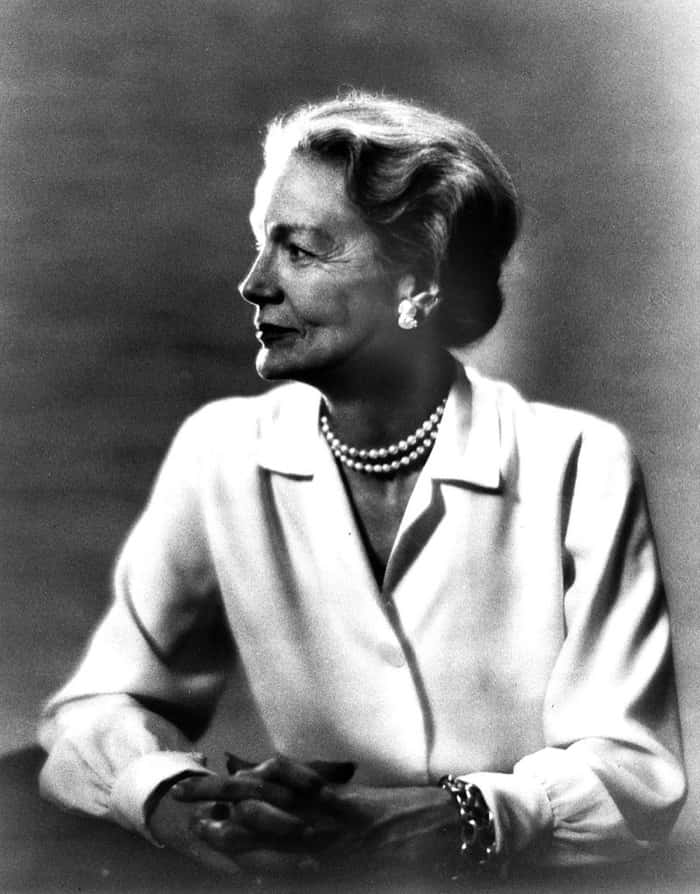
Millicent Fenwick entered the world on February 25, 1910, destined to become one of the most remarkable political figures of her era. Born into a prosperous New Jersey tobacco family, she refused to be confined by the conventions of her time, instead forging a path defined by public service and fierce advocacy. Her razor-sharp wit, steadfast integrity, and forward-thinking positions made her a towering presence in Congress, where she fought tirelessly for civil rights, labor protections, and women's equality — earning the distinguished nickname "the conscience of Congress."
Long before she stepped onto the political stage, Fenwick honed her intellectual edge working as a fashion editor at Vogue, an experience that cultivated both her distinctive sense of style and a powerful voice championing strong women. From 1975 to 1983, she represented New Jersey in the U.S. House of Representatives, where she became widely recognized for her dedication to civil rights, labor protections, and ethics reform. Her no-nonsense demeanor and incisive mind left such a lasting impression that Garry Trudeau, the creator of Doonesbury, used her as the inspiration for the character Lacey Davenport — a tribute to her political sharpness and fiercely independent spirit.