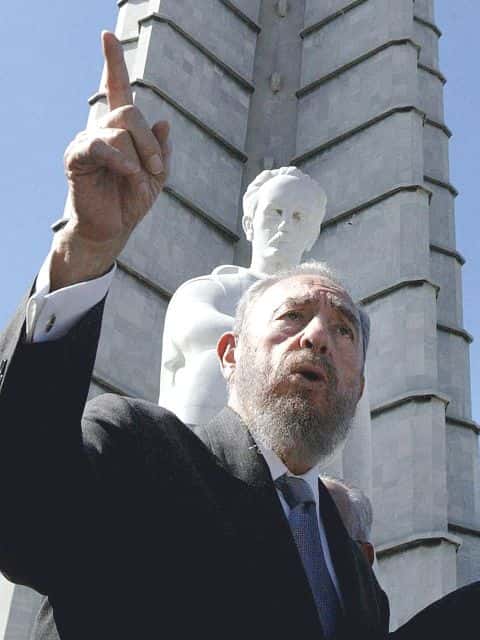
On February 24, 2008, Fidel Castro brought the curtain down on his presidency, formally stepping aside after commanding Cuba's political stage for close to five decades. It was a watershed moment — one that closed a chapter stretching all the way back to the 1959 revolution, which toppled the Batista regime and thrust Cuba into the heart of Cold War tensions between the United States and the Soviet Union.
Throughout his time in power, Castro reshaped Cuban society through sweeping socio-economic reforms while building a one-party state rooted in socialist principles. With his departure, his younger brother Raúl Castro stepped into the role of leader, opening an uncertain new era for the island nation. The transition sparked intense speculation among observers and ordinary citizens alike about what lay ahead for Cuba's governance, its economy, and its place on the world stage.
Fun Facts:
- Fidel Castro was born Fidel Alejandro Castro Riz on August 13th 1926.
- He was born in Biran, Oriente, Cuba.
- He would die at the age of 90 in November 2016 in Santiago de Cuba.
- Fidel Castro had been a long-standing member of the PCC political party since 1965.
- Known first and foremost as a Cuban Revolutionary and politician, Fidel Castro rose to claim the nation's top office in 1976.
- Prior to becoming president, Fidel Castro served as prime minister of Cuba from 1959 to 1976. During those years, he enacted sweeping political and social transformations that laid the groundwork for his eventual presidency.
- His predecessor, Fulgencio Batista, was forcefully removed from power, clearing the path for Fidel Castro's ascent.
- From the moment he seized power, Fidel Castro confronted unrelenting opposition from the United States, which not only sought to overthrow him but launched several assassination attempts as well. Yet his resilience and unwavering commitment to his leftist rule proved truly inspiring.
- Beyond direct intervention, the United States also turned to economic embargos and counter-evolution as tools to pressure Fidel Castro into abandoning his leftist governance.
- Facing this sustained U.S. onslaught, Fidel Castro made a momentous strategic choice — forging an alliance with the Russians and permitting them to establish a nuclear base on Cuban soil. This decision carried enormous geopolitical significance and left a lasting imprint on the course of history.