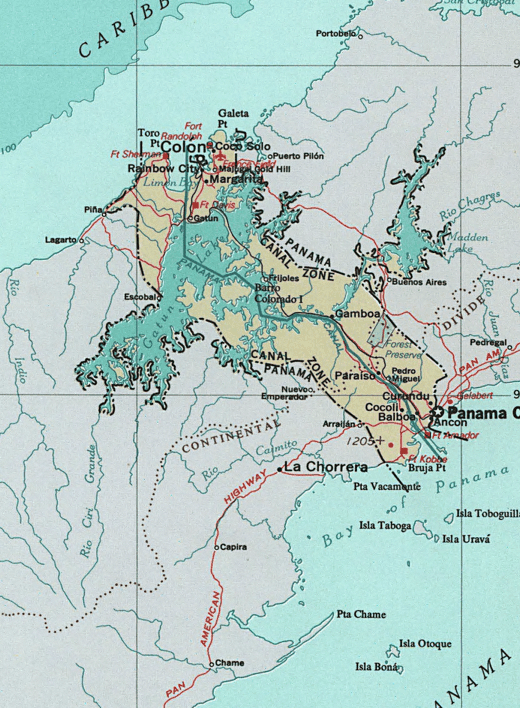
On February 23, 1904, the United States paid $10 million to acquire the Panama Canal Zone — a bold move that would showcase the nation's engineering ambitions on a grand scale. The groundwork for this purchase had been laid the year before, when Panama gained its independence in 1903 and subsequently signed the Hay-Bunau-Varilla Treaty with the United States, granting American control over a 10-mile-wide strip of land. What followed would become one of the twentieth century's most remarkable engineering achievements. Beyond its sheer scale, the construction effort served a dual purpose: modernizing naval strategy and dramatically improving ocean trade routes, which allowed both military and commercial vessels to cross between oceans far more quickly.
Background of the Canal Purchase
Panama's slender landmass, bridging the Pacific and Atlantic sides, made it the ideal location for a transoceanic waterway. Spanning just 50 miles, the canal that would eventually be carved through this narrow stretch transformed international trade by slashing ship navigation times dramatically. The first serious attempt at building such a canal came from the French, spearheaded by Ferdinand de Lesseps, but crippling health crises and financial shortfalls ultimately doomed the effort. Determined to succeed where others had failed, the United States negotiated the Hay-Bunau-Varilla Treaty with Panama in 1903, securing authority over a 10-mile-wide zone. By 1904, American engineers had taken the reins, with John Stevens and George Goethal leading the colossal undertaking. Driven by the goal of shortening trade routes between the Atlantic and Pacific Oceans, the project reached completion in 1914 — a landmark moment in the history of global commerce.
Impact and Legacy
Global trade was fundamentally reshaped once the Panama Canal became operational. Ships could now bypass the treacherous route around South America, making local shipping paths far more practical and efficient. Further improvements came in 1935, when the construction of the Madden Dam brought new operational efficiencies to the waterway. Decades later, in 1999, full ownership of the canal was transferred to Panama, though the waterway never lost its pivotal role in linking global shipping networks. The canal's importance endures well into the modern era — as of 2019, U.S. shipping alone accounted for 66% of all container freight passing through it.