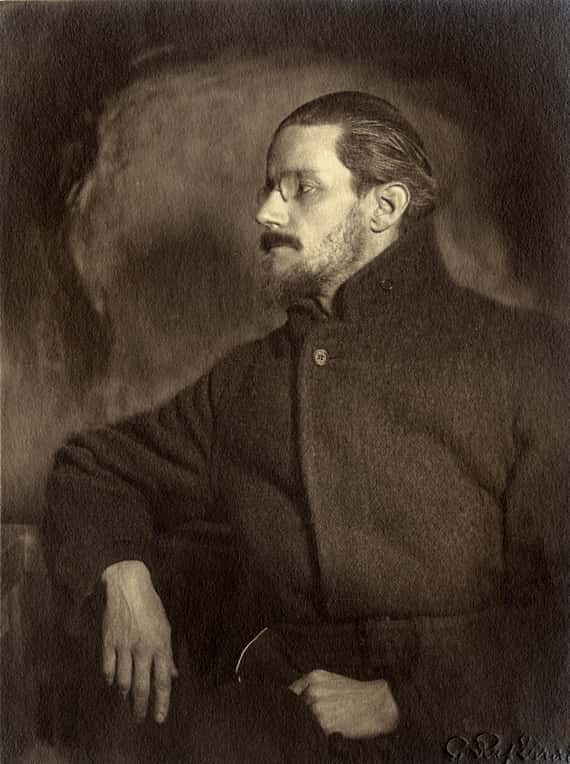
Born in Dublin, Ireland, on February 2, 1882, the poet James Joyce entered the world as the eldest of ten children. His father possessed a remarkable singing voice, yet his battle with alcoholism and a string of unwise financial choices meant the family cycled in and out of poverty throughout Joyce's formative years. Still, both parents — his mother in particular — saw the spark of genius in their son and pushed him to pursue academic excellence.
It was during his education at Jesuit schools that Joyce discovered his deep passion for literature and the written word. He also carried a profound affection for Ireland, the land of his birth. Yet the death of his mother marked a turning point: Joyce found himself estranged from both his father and the Catholic Church. The very next year, he met the woman who would become his wife, and together they eloped to continental Europe. Though he would never again make his home in Dublin, the city remained the beating heart of everything he wrote.
Themes of identity, nationality, religion, and a sweeping disillusionment with established systems ran through Joyce's body of work. Much of what he produced courted controversy — most notably his best-known novel, Ulysses, which was banned in the United States due to its explicit content. But opposition only fueled his creative fire. His aim was to shake up conventional thinking and embolden others to raise their voices. Today, Joyce's most celebrated works — including Ulysses, A Portrait of the Artist as a Young Man, Finnegans Wake, Dubliners, and Chamber Music — have cemented his standing as one of the 20th century's most influential writers. His contributions to the modernist avant-garde movement remain significant, and the mark he left on literary history is beyond dispute.