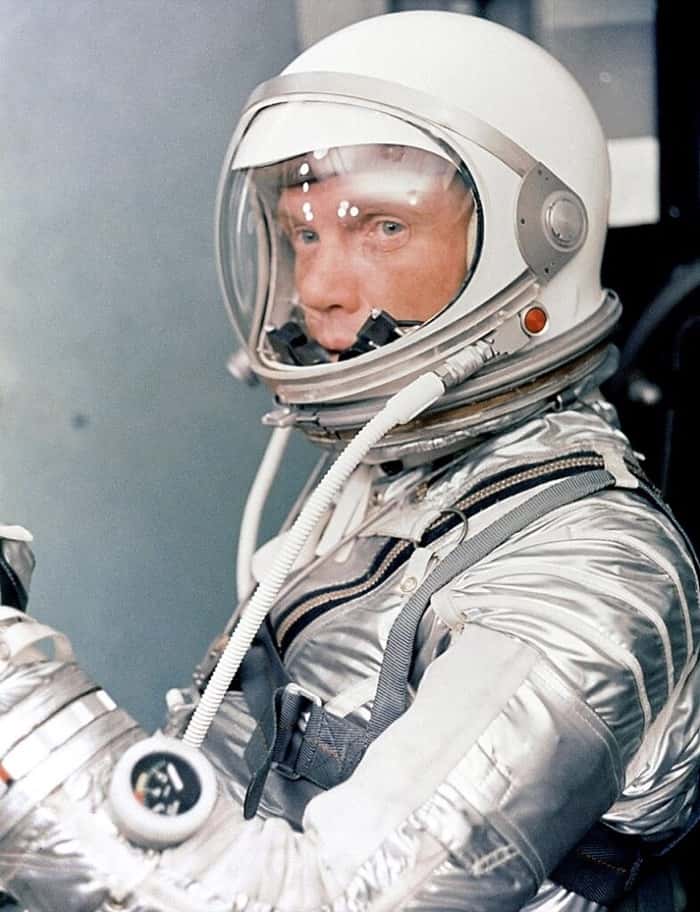
It was February 20, 1962, when John Glenn made history as the first American astronaut to complete an orbit around Earth. This extraordinary feat carried enormous weight during the early Space Race, a period defined by fierce competition between the United States and the Soviet Union over dominance in space exploration.
The Significance of the Mission
More than just a Cold War milestone between the United States and the Soviet Union, John Glenn's mission captivated audiences across the entire globe. The Soviet Union had already sent cosmonaut Yuri Gagarin into orbit in 1961, achieving the first human spaceflight and setting a daunting benchmark. Determined to match that accomplishment, the United States launched John Glenn into orbit the following year. His triumphant flight served as proof of NASA's space exploration capabilities and showed the world that the United States could hold its own in the international race to explore the cosmos.
The Flight of Friendship 7
Glenn lifted off at 9:47 a.m. EST aboard an Atlas LV-3B rocket from Cape Canaveral, Florida. Traveling at speeds in excess of 17,500 miles per hour, his spacecraft — Friendship 7 — circled the planet three times in under five hours. Throughout the mission, Glenn relayed invaluable observations about the spaceflight experience, including how weightlessness impacted the human body, information that would prove essential for training future astronauts, and how Earth's surface looked from orbit, offering an unprecedented vantage point on our world.
However, the mission was far from smooth, with several technical problems introducing real tension into the flight. One malfunctioning sensor falsely signaled that the heat shield had come loose — a scenario that could have spelled catastrophe during reentry. Even amid that uncertainty, Glenn's courage was unmistakable. He skillfully guided the spacecraft back through Earth's atmosphere, touching down safely in the Atlantic Ocean, where the USS Noa retrieved him.
A Hero's Welcome
America erupted in massive nationwide celebrations upon John Glenn's return from space. A grand ticker-tape parade wound through New York City, where President John F. Kennedy presented him with the NASA Distinguished Service Medal. Glenn's mission cemented his status as an American hero and laid the groundwork for future space endeavors, including the Apollo moon landing, which would eventually become a reality.