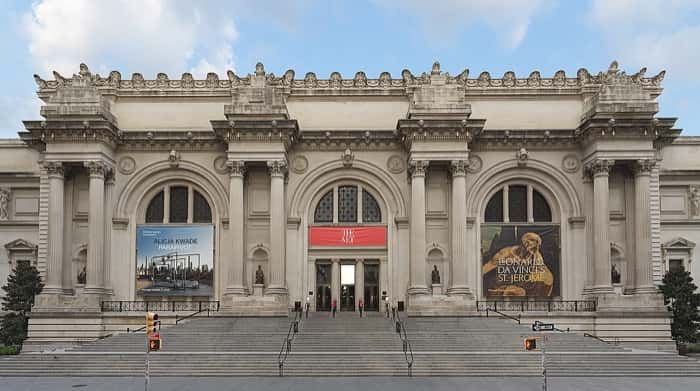
It was on February 20, 1872, that the Metropolitan Museum of Art (The Met) first welcomed the public through its doors in New York City — a moment that would set in motion the rise of one of the world's most powerful art institutions. Created with the goal of bringing art and education to the American people, the museum launched with a modest collection of works before eventually growing into a global force dedicated to preserving humanity's artistic legacy.
Back in 1870, an ambitious coalition of Americans — art specialists, business people, and local leaders — came together with a bold vision: to found The Met and propel American cultural development forward. They understood that Europe held virtually all the world's major art collections, and they were determined to build a museum capable of competing on the international stage and setting new standards. Thanks to generous financial backing from prominent New York figures, The Met was officially incorporated on April 13, 1870, igniting what would become nothing short of a cultural revolution.
When the museum first opened in 1872, it occupied a rented space at 681 Fifth Avenue, where visitors could view a collection of 174 paintings alongside several sculptures. Among the early acquisitions were significant works by European Old Masters, along with ancient artifacts and decorative arts. Public enthusiasm grew quickly, and the surge of interest drove both further acquisitions and the pressing need for a larger exhibition space.
A major turning point came in 1880, when The Met relocated to its current home at Fifth Avenue and 82nd Street — a purpose-built structure designed to accommodate its rapidly expanding collections. This move gave the museum a permanent foundation upon which its future could be built. In the decades that followed, new buildings were added, special exhibitions were introduced, and the institution steadily evolved into one of the world's premier destinations for art history appreciation.
In the present day, the Metropolitan Museum of Art stands as one of the most significant cultural institutions on earth, welcoming over two million visitors annually. Its vast collection — stretching across 5,000 years of human history — speaks to the far-reaching impact of American cultural endeavors. Whether it's Egyptian artifacts, European paintings, Asian sculptures, or contemporary art, The Met's holdings celebrate the extraordinary breadth of human creativity and innovation.
By opening its doors in 1872, The Met wrote a pivotal chapter in the story of American cultural heritage. Beyond transforming the city's cultural landscape, the museum was instrumental in establishing New York City as a global hub for art and scholarship.